Showing posts with label electronic voting. Show all posts

Thursday, October 16, 2025

Balancing Security, Transparency, and Efficiency: The Belgian E-Voting Blueprint


The electronic voting system being used in Flanders is emerging as one of Europe’s enduring and most thoughtfully designed ventures in digital democracy. Over three election cycles, 2012, 2018, and 2024, Flanders has developed and refined an offline voting system that balances technological efficiency with the bedrock principles of security and transparency. The model proves digitalization, when properly governed, can strengthen public trust.

According to a paper presented by election technologist Jan Coudron at the recent E-Vote ID Conference in France, the system is built on the idea of verifiable paper trail, which anchors every digital ballot in a physical record.

After voters make their selection on the touchscreen, the machine prints a paper ballot showing both the readable choices and a QR code that encodes the same information. The voter can then visually confirm their vote before depositing the printout into a sealed ballot box. This ensures that each electronic vote has a tangible, auditable counterpart—bridging the gap between digital efficiency and paper-based trust.

History

Belgium’s foray into e-voting began in the early 1990s with the Digivote and Jites systems, which relied on magnetic cards. While these early efforts demonstrated technical potential, concerns about transparency, auditability, and long-term reliability soon surfaced.

In response, a 2007 study called BeVoting, authored by a consortium of seven Belgian universities—redefined the nation’s approach around three core principles: verifiability, security, and offline operation.

By 2012, Flanders rolled out the “enhanced paper voting” system, combining touchscreen convenience with a voter-verifiable paper trail. Over the next decade, the model steadily expanded. By 2024, it covered about 62% of Flemish voters across 159 municipalities—transforming what began as a limited pilot into a core feature of regional democracy.

Firm legal foundations

The Flemish model is grounded on a robust legal and institutional framework. Two decrees—the Local and Provincial Electoral Decree (2011) and the Digital Electoral Decree (2012)—establish strict rules for system design, data management, and verification procedures. Oversight is vested in an independent College of Experts appointed by the Flemish Parliament, complemented by certified evaluators who audit hardware and software integrity before and after each election.

The Flemish platform operates entirely offline. Votes are recorded locally, printed on paper, and stored both digitally and physically. Encrypted data copies are saved on multiple USB drives, while every stage—from system setup to result transmission—is sealed, hashed, and logged for verification. This “island architecture” drastically reduces cyberattack surfaces while maintaining the speed and reliability expected from digital processes.

Early learnings

The 2012 rollout surfaced several lessons: compressed preparation timelines, uneven staff training, and interface issues like accidental double taps. However, subsequent evaluations in 2018 and 2024 recorded marked improvement. Manuals were rewritten in clearer, visual formats; polling officers received better training; and the interface was redesigned for clarity and accessibility. By 2024, 94% of municipal coordinators reported satisfaction with the system, praising its stability, accuracy, and ease of use.

Tangible improvements

Electronic voting has transformed election logistics in Flanders. Where manual counting once consumed days, complete municipal results now arrive within hours. In the 2024 elections, polls closed at 3 p.m., and full results were ready by 7 p.m. The system also reduced manpower requirements by an estimated 10,000 staff compared with manual counting. Yet the emphasis on transparency never diminished—each digital tally remains verifiable against its corresponding paper ballot, ensuring that efficiency does not come at the cost of trust.

Ensuring long-term gains

With the current equipment contracts expiring in 2027, Flanders now faces critical policy decisions: whether to upgrade, extend, or transition to new platforms. Considerations include system cost, accessibility for voters with disabilities, sustainability of hardware, and potential integration with national digital identity programs. Whatever direction policymakers choose, maintaining the delicate balance among security, transparency, and efficiency will remain the touchstone of the next phase.

Flanders’ offline e-voting model demonstrates that democratic innovation is not defined by speed or modernity alone—it is defined by verifiable trust. By keeping the process auditable, offline, and under independent oversight, Belgium has shown that technology can reinforce rather than compromise electoral integrity.

The Flemish experience stands as a measured, mature blueprint for resilient digital democracy.

Tuesday, August 1, 2023

Next up for the Philippines: automated grassroots polls


Photo courtesy of ABS-CBN News


Since 2010, the Commission of Elections (Comelec) has successfully used electronic counting for national and local elections in the Philippines. This time, the poll body has set its sights on bringing the benefits of automation down to elections at the grassroots.

The hyperlocal polls, which go by the official name of Barangay and Sangguniang Kabataan Elections (BSKE), is set for October 30 of this year. Under the law, the BSKE is to be held every three years to choose grassroots leaders in 42,027 villages (barangays) across the country. Currently, the BSKE is still conducted manually and is plagued by problems of slow count, human error, and fraud.

The BSKE modernization initiative kicked off recently with mock elections in three pilot areas in and around the capital city of Manila. The successful exercise saw the return to active service of the familiar vote counting machines (VCMs), following a massive nationwide deployment in the 2022 general elections.

During the mock elections, Comelec Chairman George Erwin Garcia noted how automating the BSKE would speed up the process and make results available an hour after the polls close. Manual count is known to take days or even weeks to finish.

E-voting is also expected to reduce the risk of fraud and errors hounding BSKE. While manual elections are vulnerable to vote padding miscounting of votes and other anomalies, automated elections are more secure and reliable, as the votes are cast and counted electronically.

In addition, automated elections prove to be cost-effective in the long run, as they require fewer personnel and resources. The savings brought on by automation should be a welcome development for the national government.

Moreover, the automation of the grassroots polls is seen to immensely benefit electoral board members. While manual elections can be a long and tiring process for poll workers, who often must work for up to 24 hours straight, automated elections are much less demanding on election workers, as they only must operate the voting machines and do not have to manually count the votes.

The citizen watchdog Namfrel (National Movement for Free Elections), which was present as an observer in the mock elections gave its imprimatur on the initiative saying that automating the BSKE is “doable.”

The Comelec’s initiative to automate the BSKE represents a major step forward in upgrading the transparency and efficiency of the grassroots polls in the Philippines. With the benefits of automation trickling down to the most basic unit of government, the Philippines bolsters its standing as a primary reference for election modernization.

Thursday, October 6, 2022

Uneventful Brazil polls silence critics


Despite dire predictions, Brazil’s first round of elections proceeded smoothly and concluded without hitches. The country’s election system proved to be up to scratch as it was able to count over 100 million votes by midnight, enabling poll authorities to publish results online without delay.

A mission formed by observers from the Organization of American States (OAS) has released a report lauding the “orderly and normal manner” of the vote.

“The mission salutes the people of Brazil, who turned out to vote yesterday, Sunday, to express their will in a peaceful and democratic manner. Under a highly tense and polarized atmosphere, Brazilian citizens showed maturity and civic commitment,” the report said.

Similarly, markets were upbeat about first-round results. In a note to investors, J.P. Morgan sounded guardedly optimistic about the polls.

"The risks around political polarization, with non-acceptance of the ballot results must be monitored, but so far there have been no notable events to report," it said.

The undramatic polls contrast markedly with the gloom and doom scenario being painted by incumbent president Bolsonaro during the run-up. It might be recalled that Bolsonaro went after the election system hammer and tongs, relentlessly questioning its credibility, and warning of widespread unrest should he lose.

Analysts had feared that Bolsonaro’s polemics was a dangerous tactic to hold on to power, as the incumbent had trailed his rival, ex-president Luiz Inácio Lula da Silva, in all pre-election surveys. Yet Bolsonaro mustered 43.2% of the votes to Lula’s 48.4%, an impressive showing for the perceived underdog. Under Brazil’s election laws, if no candidate gets 50% of the vote in the first round of voting, a runoff election between the highest scoring candidates will be held.

Analysts note that the stronger-than-expected showing of Bolsonaro had seemingly silenced his rhetoric against the voting system. With the prophesied anomalies turning out to be duds, the whole narrative appeared to have been defanged.

Bolsonaro’s sudden silence on the matter is likely to be taken by the public as a walk back and an acknowledgement that the election system he had been denouncing in fact works. This tacit retraction could prove crucial to the country’s post-election stability as Da Silva, despite failing to score an outright win, still pulled 6,000,000 more votes than Bolsonaro, and enjoys an advantage going into the taut mano-a-mano matchup set on Oct. 30.

Thursday, May 23, 2019

Electronic Voting in Iraq: Mission Unaccomplished


Fifteen years after US President George W. Bush gave his “Mission Accomplished” address, Iraq continues its struggle for democracy. Regrettably, key institutions like its Independent High Electoral Commission have proven inefficient in laying the foundations for a thriving democracy. What is worst, they are failing to learn from their own recent experiences. 
In May 2018, Iraq headed to the polls for its first election in the post-ISIS era. What initially appeared to be a relatively decent election gradually emerged to have involved massive potential fraud, forcing a manual recount of the results of a failed electronic voting system. These botched elections cast into serious doubt Iraq's ability to strengthen its own democratic institutions and conduct future election processes.
The tragic episode of the 2018 elections could have had a positive spin, had authorities learned the lesson. However, the fact that they are mulling over the idea of using the same unreliable technology, is a sad testament to the struggle facing Iraq’s fragile, corrupt and inefficient institutions.
Most of the complaints reported after the 2018 election in Iraq concerned the alleged compromise of the optical scanners provided by Miru Systems. The $135 million system purchased by Iraq’s elections commission was intended to help the critical vote-counting process. Yet, as reported by media outlets, tests of electronic voting machines produced varied results, giving credence to the fraud claims.
Miru Systems is no stranger to this type of controversies. Currently, its leadership is having to answer questions before South Korea’s parliament about its dealings with election commissions in countries like the Democratic Republic of Congo, Argentina and El Salvador. Prosecutors allege that a corruption scheme allowed Miru to win contracts. The Association of World Election Bodies (A-WEB), which helped MIRU to win contracts around the world, is also under investigation in South Korea. 
Though it is yet to be proven if Miru Systems applied in Iraq similar questionable techniques to close deals, it is already evident that the end result is far from ideal. 
Miru’s voting technology was analyzed by academics from the United States and Argentina. According to election expert Joseph Hall, experts “were able to show how completely insecure the Miru system was, including: publicly posted cryptographic keys allowing total modification of the system or vote data; radio transmission of each ballot, which was easily intercepted; and using chips embedded in each paper ballot (RFID tags) to load many more than one vote per ballot.” Argentina stopped the procurement and legislative authorization process to obtain these machines shortly after the security researchers publicly presented these flaws to Argentinian legislators.
Iraq’s Independent High Electoral Commission must rebuild trust after the 2018 mayhem. The nation needs an election that leads to the kind of political stability that generates trust and creates the conditions for a thriving democracy. So far, transparent, efficient and modern elections continue to be a “Mission Unaccomplished”.

Monday, March 18, 2019

Brazil election system: From paper ballots to e-voting giant


By the end of the last century, there was a deep-rooted public outcry regarding electoral justice across the world. This urge bore the need for electronic voting, a technology solution ensuring transparency, accountability, and security in election processes.

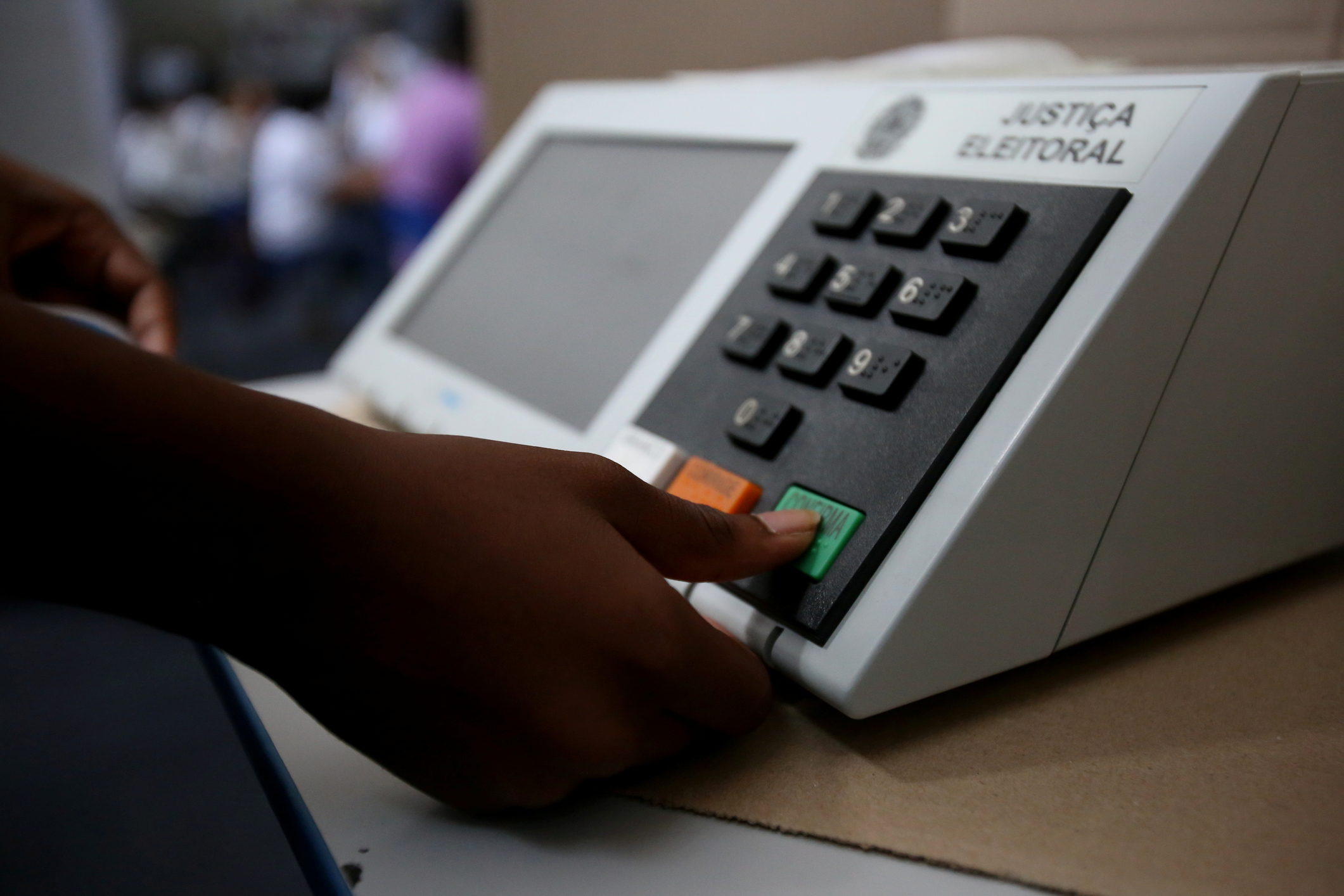
Brazil was among the pioneer nations that embraced e-voting. Voting was made compulsory with the introduction of electronic voting in 1996. Fast forward twenty-three years, and there are many lessons we have learned from this South American giant.

Grim beginnings
The Brazilian system was secret balloting whereby votes were cast individually on traditionally printed ballot papers. Over time, analysts and skeptics alluded that the traditional scheme of voting had massive flaws that rendered the electoral process shambolic.

The paper voting system and the ballot boxes proved untrustworthy. The paper-based manual system demanded intensive workforce which drew significant amounts in compensation, even if it did not ensure the accuracy and credibility of the process. Similarly, there was no possibility to reuse or recycle paper ballots.

The system was characterized by massive destruction of votes as well as manipulation during tallying. Besides, the traditional method of voting was tedious, and many citizens avoided participating. For instance, people who lived far away from the voting booth would skip voting, compromising on the turnout expected. This shortcoming also created a leeway for electoral fraud and malpractice such as bribes for people to take part.

Something had to change. It was for many of these reasons that electronic voting was proposed and implemented.

The election technology transformation

Elections around the world are increasingly relying on technology to make them more transparent and efficient. Technology is easing many election-related processes ranging from registration of voter IDs to announcement of polling stations, counting of votes to online results publication and many other things.

By the year 2000, Brazil was already conducting elections using digital ballot boxes nationwide. Nowadays, the country has over 460,000 electronic voting stations, which help to increase the number of voters each year, at around six percent.

Since the introduction of e-voting, Brazil has witnessed a significant reduction of barriers to democratic participation, particularly among the less educated electorate. For example, electronic voting has eliminated many reported difficulties for writing paper ballots.

The machines are being modernized with each passing election to develop a user-friendly and straightforward interface so that illiterate voters can also easily use them. They have also isolated the machine from communication devices, dedicating them for only voting purpose, for reducing the chances of external hacking. In addition to the installation of fingerprint readers in the digital machines, the Brazilian government is also working to equip them with face readers.

The paradigm shift from traditional paper ballots to electronic voting in Brazil has further established mainly positive effects stemming from abating spoiled votes together with the enfranchisement of lesser socio-economic status electorates.

Brazil has gone a long way in its election technology journey. It has already set an excellent precedent for other democracies, even though there is -and there will continuously be- room for improvement to enhance its electronic voting solution.

Thursday, November 9, 2017

Questions loom over Venezuela’s electronic voting system


The recent regional elections held on October 15 in Venezuela, have sparked a new wave of controversy around Venezuelan elections and the legitimacy of its results.

Andres Velasquez, who was the opposition candidate for the southern state of Bolivar, is crying foul and claims to have physical copies of all tally reports to back his claim. According to Velasquez, the printed machine tallying reports show thousands of more votes for him than the National Elections Council (CNE in Spanish) website shows.

As reported by Anatoly Kurmanaev for the Wall Street Journal, Luis Lander, director of the Venezuelan Electoral Observatory, a nonpartisan group in Caracas that tracks elections stated “There’s clear manipulation here,” after he examined voting-machine receipts that the opposition alliance posted online. “The results were altered to allow the losing candidate to be declared the winner,” he added.

Although the evidence presented seems conclusive, the truth is that fraud accusations should not come as a surprise. “Crying fraud is an extremely familiar routine to the Venezuelan opposition, and one that it has pursued at virtually every election since 1999,” wrote Rachael Boothroyd Rojas on venezuelanalysis.com.

David Smilde, a US scholar who has followed the political struggles in Venezuela, recently penned an article asking authorities and opposition parties come up with good answers to explain what has transpired through the press. He emphasized that “Both the CNE and the MUD have the ability to significantly clarify what happened and they should do so as soon as possible.”

Describing the electronic voting system used in Venezuela, and how easy could be to determine who is telling the truth, Smilde commented “Venezuela’s voting system has a solid system of audits and checks. Fantasies of secret tabulation rooms that alter the vote can be set aside. Each voter who votes, gets a paper receipt saying who she voted for, and then deposits it in a box. After the elections, the citizens who are working at the tables, representing all parties, count the ballots. Then they check their tabulation with the act that is printed out from the machine. They sign off on it and the parties’ witnesses get a copy of it. These acts can then be compared to the electoral tallies presented by the National Electoral Council (CNE) on their web page, and any fraud can be detected.”

Further complicating matters, during the National Constituency election held in August 2017, the CEO of Smartmatic, the company that had provided the electronic voting solution for all election since 2004, denounced that the turnout figures published by authorities had been manipulated by at least one million. Authorities disregarded the accusation as pure nonsense and proceeded to organize these latest elections with new technology providers.

Francisco Toro, from Caracas Chronicle, thinks “Venezuela’s machine-based electoral system has many, deep problems, but one key redeeming feature: it can be audited.” Questions are looming over Venezuela’s electronic voting system. It is time to act, and audit the tallying reports to find out what happened and clear all doubts. The future of a nation formerly regarded as a democracy beacon is at stake.

Wednesday, December 9, 2015

Once again, electronic voting guarantees exact results in Venezuela

Image: Reuters
Eleven years and thirteen elections after electronic voting was introduced in Venezuela, voters headed back to the polls to elect its parliament representatives. The elections, held on December 6 registered a participation rate of 75%, which is an impressive turnout considering that voting is not mandatory in Venezuela. 
 

Venezuela’s system automates all stages of the election, from biometric voter authentication, to voting, results transmission, tallying and results publication. The system has been deemed reliable by important observation organizations such as the Carter Center and the European Union.  

Weeks before the election, a report published by the International Institute for Democracy and Electoral Assistance stated that "the strength of the Venezuelan electoral process lies in the automated voting and vote-counting system". Meanwhile, Leonel Fernandez, head of the observation mission from UNASUR said in his post-election balance that "The Venezuelan voting system is solid and safe." 

One of the most important attributes of the technology used in Venezuela is its high level of auditability. Before, during and after the election, technicians from participating political parties, independent auditors and electoral authorities review the system thoroughly. 

In addition, during the night of the election a public audit was performed to compare the printed vote receipts against the precinct counts issued by more than 50% of the voting machines. No significant issues were found.  

On Sunday night the official results of 96% of the seats in contention were published, and they were accepted by all political parties without exception.

1,799 candidates were competing for the 167 seats that constitute the parliament. This was a heavy contested election, where few votes made the difference to declare the winners. For example, in Aragua, a state in the central region, one parliament seat was decided by only 83 votes, a difference of only 0.06%.

Tuesday, November 3, 2015

Azerbaijan considering electronic voting system for next election


It is not terribly common to find discussions of advancing democracy coming from countries that are perhaps more associated with communism or socialism. However, it is perhaps from these previously political states that the emergence of truly fair, free and open democracy can have among the greatest impact, as just might be the case for Azerbaijan.

The former member of the Union of Soviet Socialist Republics (USSR or “Soviet Union”) recently held its major national election on November 1. The ruling Yeni Azerbaijan (“New Azerbaijan”) party, headed by President Ilham Aliyev, was re-elected with a sizable majority, taking 71 of the 125 seats in the country's parliament. As a result, Aliyev will be leading the country for another five years.


Unfortunately, this election was not without its fair share of controversy. There have been allegations of ballot stuffing at a number of the polls, for instance, as well as the noted boycott by several of the nation's leading opposition parties. These include the National Council of Democratic Forces (NCDF), the Musavat party, and the Democratic Party of Azerbaijan. According to the NCDF, the polls in Azerbaijan are “fully falsified” and do not accurately reflect the will of the people of Azerbaijan.

A democracy cannot be fully respected and hold the legitimate seat of power if the nation's people do not trust in the integrity of the electoral process, especially when leading opposition parties boycott the polls. This leads to an inherent skewing of the results, even though voter turnout was a mere 55.7 percent.

To move the democracy forward and to earn the respect of the Azerbaijan people, the electoral process in the nation is in desperate need of reform. If the integrity of the election is not trusted, then neither can the results and this can lead to further political upheaval. Thankfully, the November 1 election was conducted in a peaceful manner with no major stories of violence.

Looking ahead to the next election in 2020, the greater possibility of a free, fair, open and transparent election is possible, one where the major opposition parties may not feel compelled to boycott. During a briefing on October 9, Azerbaijan Central Election Commission (CEC) Information Center Director Rufat Gulmammadov indicated that electronic voting technology could be suitably launched in the nation.

“If this issue is reflected in the legislation, I believe that it can be resolved without any problems from the technical point of view,” stated Gulmammadov. “If the issue of electronic voting will be reflected in legislation of the country, this corporate network can act as a platform for the launch of e-voting.”

He is referring to the corporate network of the CEC itself, which can operate as the framework for an e-voting system in Azerbaijan's national elections. The network has been in operation for more than three years and has already been used successfully in previous elections. The next major step would be for the parliament of Azerbaijan to pass legislation that would facilitate the widespread adoption and deployment of e-voting technology.

With greater reliability and transparency, an electronically-powered election in Azerbaijan may be ready for 2020. Perhaps then, the results will not be as heavily disputed and a point of rampant controversy as this most current election. 

Thursday, September 10, 2015

Voter rights and the barriers to voter registration in USA

It is undeniable that while the United States is not the largest democracy in the world, it is one of the most influential. What happens in America has a profound impact all across the globe. And this is why next year's presidential election is so important.

With Barack Obama currently serving his second term as the President of the United States, he is no longer eligible for re-election. Even so, as a Democrat and as an American citizen, he has a vested interest in how the election turns out. More to the point, the President recently published a guest article on Medium discussing the current voter ID laws in the country and how they are hindering the expression of the true American will.

“The right to vote is one of the most fundamental rights of any democracy,” he states before reminding readers that this year marks the 50th anniversary of the singing of the Voting Rights Act - the act that broke down legal barriers and made it easier for African Americans and other minorities to cast a ballot.

However, while all American citizens do have the legal right to vote in the United States, not all have had equal access it. The President points out that there are “still too many barriers to the vote” even today, particularly among minorities.

As President Obama decries, the current “provisions specifically designed to make it harder for some people to vote,” like the restrictive photo ID requirements. His Republican opponents say that these voter ID laws help to reduce or eliminate voter fraud, but the President view these laws as unnecessary barriers that prevent the proper expression of a true democracy.

Because the current requirements can vary so widely from state to state, progress will be difficult and the move toward nationalized standards may be a better option. The first step toward greater voter turnout, which would result in a more representative government, is to get as many eligible voters registered in the first place. This could be aided by the expansion of electronic voter registration, a proposal that is gaining more support each day. An additional option is to link the electronic voter registration to driver's licences for a simpler and more automatic solution.

Looking ahead to the 2016 election, Presidential hopeful Hillary Clinton has also spoken out against the restrictive voter ID laws in many states and she continues to be a champion for equal voting rights for all eligible voters. By removing these restrictive barriers and erecting more accessible electronic voter registration systems, more citizens who are current disenfranchised can exercise their democratic right more freely.

For the minorities and other groups who feel like they're being left behind, politics can feel like an “us against them” scenario where they are powerless to elicit change. That cannot and should not be the case. All eligible voters can and should have a voice in how their country is run. And it starts with voter registration.