Showing posts with label automated elections. Show all posts

Saturday, May 13, 2023

Georgia modernizes polls, inches closer to EU membership

Georgia’s recent efforts to modernize its elections have the effect of nudging it closer to its goal of becoming a member of the European Union.

The EU has laid down 12 conditions that Georgia must meet before it can join the union, including the establishment of an independent judiciary, protection of human rights, and an intensified fight against corruption. In complying with such, Georgia must first ensure the proper functioning of democratic institutions, including free and fair elections.

In the last few years, the country has implemented several measures to boost the transparency and fairness of its electoral process, including the use of vote counting machines and voter authentication systems.

Irakli Kobakhidze, who heads the ruling Georgian Dream party, had announced a widespread use of electronic voter registration and voting system starting with the 2024 Parliamentary elections.

“The successful experience of voter registration and voting with modern technologies allows us to implement this initiative on a large scale from 2024”, Kobakhidze said, adding that “electronic voting will ultimately strengthen public confidence in the vote-counting process, ensure that more than 70 percent of votes are counted and results published within minutes after the closing of the voting process, and eliminate problems related to rigging exit polls and parallel vote tabulation.”

Over the past two years, the Central Election Commission (CEC) of Georgia has successfully used electronic vote counting technology and identity solutions in three different pilots in the cities of Batumi, Adjara, and Senaki.

Politicians have crossed party lines on the matter, with Aleksandre Rakviashvili, an MP from the Girchi opposition party calling the move a “step forward” for ensuring a fairer electoral environment. This is reflective of the overwhelming support for the movement – as much as 83% of Georgians want to be in the EU.

The use of vote counting machines has dramatically significantly reduced human error and manipulation in the vote counting process. With the machines being designed to count votes quickly and accurately, the need for manual vote counting, which can be prone to errors and disputes, is eliminated.

In addition to the use of technology, Georgia has also made significant efforts to increase the participation of women and other underrepresented groups in the electoral process. In 2020, the CEC established quotas for female candidates in local elections and introduced a range of measures to encourage women to stand for office.

As a result, the number of Georgian women in parliament jumped from 14 to almost 20 percent. In 2021, women representatives in local councils increased from 13.8 to 24 percent. Likewise, women received 31.4 percent of mandates in proportional lists (441 mandates in total) compared to 19.8 percent of mandates received in 2017.

Georgians still need to buckle down to work – there is still much to be done in ensuring the transparency and fairness of Georgia's electoral process. The CEC needs to act on reports of irregularities and voter intimidation during recent elections, and the developing democracy needs to adopt a whole-of-nation approach to fortify its institutions and legal framework if it is to attain its European aspirations.

Thursday, October 6, 2022

Uneventful Brazil polls silence critics


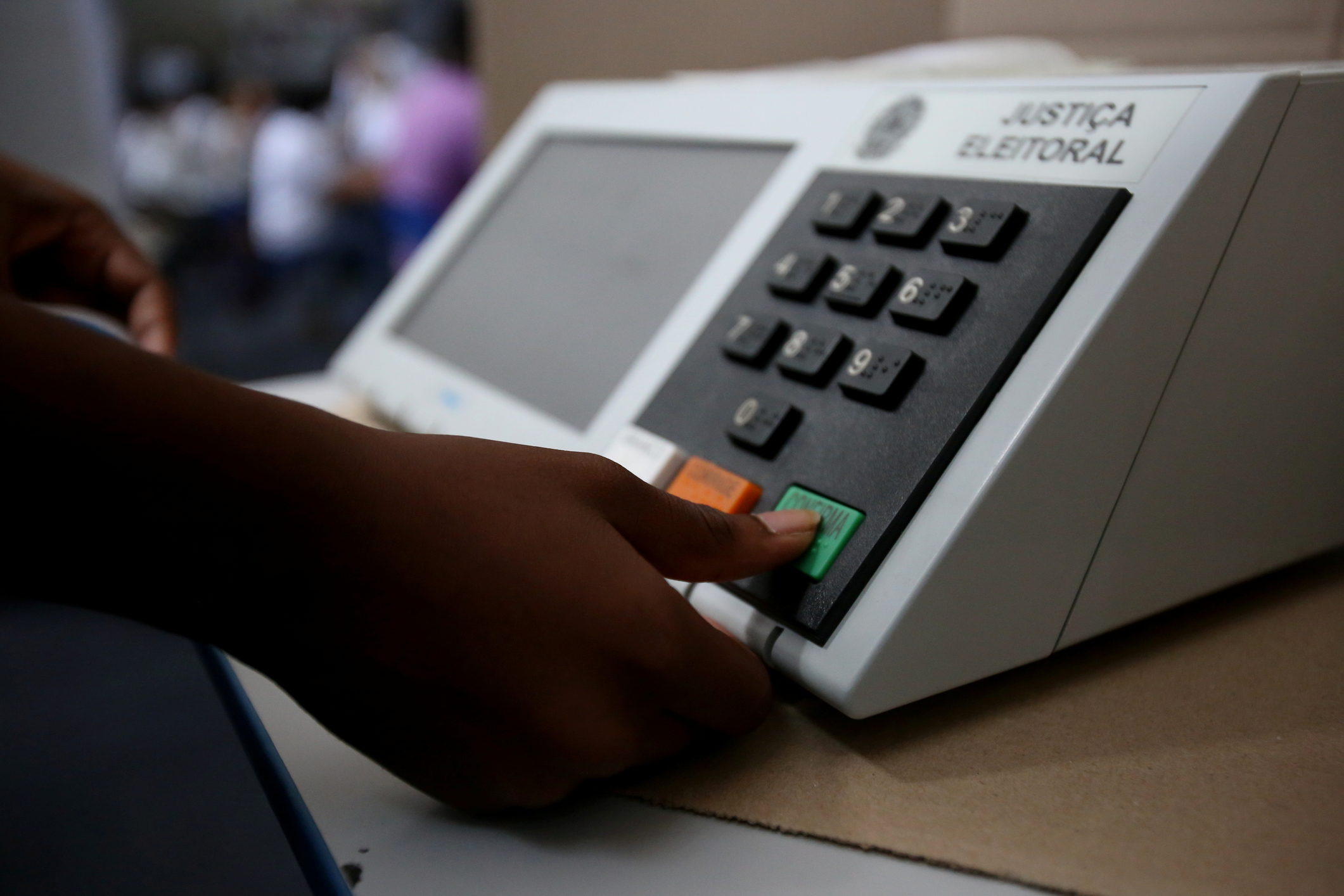
Despite dire predictions, Brazil’s first round of elections proceeded smoothly and concluded without hitches. The country’s election system proved to be up to scratch as it was able to count over 100 million votes by midnight, enabling poll authorities to publish results online without delay.

A mission formed by observers from the Organization of American States (OAS) has released a report lauding the “orderly and normal manner” of the vote.

“The mission salutes the people of Brazil, who turned out to vote yesterday, Sunday, to express their will in a peaceful and democratic manner. Under a highly tense and polarized atmosphere, Brazilian citizens showed maturity and civic commitment,” the report said.

Similarly, markets were upbeat about first-round results. In a note to investors, J.P. Morgan sounded guardedly optimistic about the polls.

"The risks around political polarization, with non-acceptance of the ballot results must be monitored, but so far there have been no notable events to report," it said.

The undramatic polls contrast markedly with the gloom and doom scenario being painted by incumbent president Bolsonaro during the run-up. It might be recalled that Bolsonaro went after the election system hammer and tongs, relentlessly questioning its credibility, and warning of widespread unrest should he lose.

Analysts had feared that Bolsonaro’s polemics was a dangerous tactic to hold on to power, as the incumbent had trailed his rival, ex-president Luiz InĂ¡cio Lula da Silva, in all pre-election surveys. Yet Bolsonaro mustered 43.2% of the votes to Lula’s 48.4%, an impressive showing for the perceived underdog. Under Brazil’s election laws, if no candidate gets 50% of the vote in the first round of voting, a runoff election between the highest scoring candidates will be held.

Analysts note that the stronger-than-expected showing of Bolsonaro had seemingly silenced his rhetoric against the voting system. With the prophesied anomalies turning out to be duds, the whole narrative appeared to have been defanged.

Bolsonaro’s sudden silence on the matter is likely to be taken by the public as a walk back and an acknowledgement that the election system he had been denouncing in fact works. This tacit retraction could prove crucial to the country’s post-election stability as Da Silva, despite failing to score an outright win, still pulled 6,000,000 more votes than Bolsonaro, and enjoys an advantage going into the taut mano-a-mano matchup set on Oct. 30.

Thursday, August 18, 2022

Kenya shuns past, holds first peaceful vote in years


International election observers heaved a sigh of relief as the Kenyan elections came to a close without violence in a stark departure from past polls that had been pockmarked by killings.

“On election day, voters exercised their right to vote in a general peaceful manner throughout the day,” lauded Ivan Stefance, head of the EU observation mission.

In a statement, Bruce Golding, former Prime Minister of Jamaica and the current chairman the Commonwealth Observer Group commended the people of Kenya for the “peaceful and orderly manner in which they exercised their right to vote on 9 August 2022.

“It is our hope that by bringing this electoral process to a successful conclusion, Kenya will serve as an inspiration for the Commonwealth and indeed, the rest of the world, that relevant lessons have been learned from the past, and that each successive election is an improvement on the previous one,” Golding said.

Although the matter is more nuanced, many observers are already singling out this year’s successful implementation of technology as a significant factor in keeping violence at bay.

“The mission commends the Independent Electoral and Boundaries Commission (IEBC) for the successful use of technology for voter registration voter identification and transmission of results. It has improved efficiency and increased the transparency for the election process in Kenya. At least those of us who were here in the last election can attest to that,” said Jakaya Kikwete, Head of the East African Community Observation Mission, and former President of Tanzania.

Dr. Ernest Bai Koromo, former president of the Republic of Sierra Leone noted the improvement in the overall voting exercise across the country. “Polling stations opened on time, voters were identified easily by digital kits and no major security incident was reported," he said.

“As a result of these changes to the Results Transmission System (RTS), the provisional presidential election results were publicly accessible on the IEBC portal. The Mission welcomes introducing these transparency measures to improve the integrity of the electoral process,” Koromo added.

The IEBC earned plaudits from the Commonwealth Observer Group for learning from past lessons, saying that “the Group notes that the IEBC applied a lessons-learned approach from the 2017 elections and adopted new software and hardware through the requisition of the KIEMS kit from a company called Smartmatic. It was noted that the IEBC undertook two simulation exercises of the KIEMS kits for the electronic transmission of results, the second of which our Advance Team was able to observe. We acknowledge these efforts, as the transparency they displayed contributed to building confidence in this key feature of the electoral process.”

The Kenyan election saw Deputy President William Samoei Ruto, 55, winning narrowly with 50.49 percent of the votes over his rival Raila Odinga, 77, who took 48.85 percent. Although Odinga is contesting his loss, political observers largely believe the election results to be credible.

Election watchdog ELOG (Elections Observation Group), a federation of more than a dozen NGOs, said that its parallel vote tabulation (PVT) estimates were consistent with IEBC’s official results.

“In light of our assessment of the Election Day processes and given that IEBC figures fall within the projected ranges, the PVT projections, therefore, corroborate the official results,” said the group’s chairperson Anne Ireri.

Kenyan citizens and election observers had been on tenterhooks during the lead up to the elections over fears that this year’s exercise would be a repeat of the bloody elections in 2007 where 1,200 people were killed and in the 2017 violence which left 24 people dead across the nation.


Monday, August 1, 2022

E-voting wins big among Philippine voters; earns praise worldwide


Nine out of ten Filipino voters prefer future elections to be automated, according to a new Pulse Asia survey.

The findings are part of the result of the survey commissioned by brain trust Stratbase ADR in the wake of the country’s general elections in May.

Since the country had starting using e-voting in 2010, approval for elections had sharply risen, from 30% in the last manual election to 82% in the most recent automated election.

Aside from 90% of voters finding the elections credible and trustworthy, the survey also revealed that 95% of the 1,200 respondents’ voters found the vote counting machines (VCMs) easy to use.

The polling firm observed widespread acceptance of the automated election system notwithstanding isolated reports of some voters waiting in line for hours in the stifling heat.

"We find here that nine out of 10 Filipinos are satisfied with the vote counting machines, significantly higher in [the] Mindanao [region], [where] you have 99% expressing satisfaction with the vote counting machines," Pulse Asia President Ronnie Holmes said in a forum.

The survey showed that two-thirds of Filipino adults believe that the 2022 elections are "more credible now" compared to the presidential polls in 2016, while 18% said these were "as credible as before." Only 6% said the election results were less credible this year.

The survey findings are consistent with the results of the mandatory Random Manual Audit where the electronic results registered a 99.95% match with manual count of ballots from 746 randomly selected precincts.

The elections also earned plaudits from the international circles.

Ned Price, US State Department Spokesman said that “the casting and counting of votes were conducted in line with international standards and without significant incident.”

The head of the observation mission from the Carter Center, Peter Wardle, noted that the elections were well-run, saying that “We found in our analysis of the election process that there were no significant gaps in the process and in particular, to pick up the theme of trust, we were impressed by the fact that in the Philippines, there are a number of mechanisms which are running either alongside or as a check on the automated voting to help build trust in the process.

Japanese Ambassador to the Philippines Koshiwaka Kazuhiko cited the smooth conduct of the election.

“I was honored to have witnessed first-hand this incredible exercise of democracy. I look forward to working with the new administration in bringing Japan and Philippine ties to greater heights,” he said in a tweet.

Tuesday, February 18, 2020

A new botched attempt to modernize elections in Dominican Republic


Election authorities in Dominican Republic failed once again to modernize its elections through technology. This time around the problems surfaced during the municipal elections held on February 16, 2020. 

Only four hours after polls opened, the Junta Central Electoral, the Dominican electoral body, realized that something was wrong with the voting machines. Julio Cesar Castanos, president of the Junta Central, acknowledged that nearly half of the voting machines did not work, leaving citizens unable to cast their votes. 

One day before the election, officials had been warned of a problem with the technology, yet, they thought it could be fixed. “We were warned, but not of the magnitude of the problem,” Mr. Castanos Guzman said. “They told us it was an issue that could be fixed the second the machines were installed.”

The automated voting system was deployed in 18 of the 158 municipalities and focused on cities and regions with high population density. Traditional voting was used elsewhere. 

This major mishap should not come as a surprise. In a video that leaked after the suspension of the elections, Guzman admitted that they had not done sufficient testing ahead of the election. Also, in 2016, the Junta Central Electoral failed its attempt to automate the voter authentication process. Although the electronic poll books did not work, authorities managed to complete the election that time. 

Although there are many reasons why this municipal election failed, one that cannot be overlooked is the fact that authorities dared to develop the system themselves with the help of providers that had zero election expertise. Instead of relying on expert companies and technology that is already available, they insisted on creating their own. Their lack of experience is now bare naked.

Thursday, September 5, 2019

Election modernization moves forward in Argentina


Argentina held its Primary, Open, Simultaneous and Mandatory elections on Sunday, August 11. The primaries determine the candidates for the October 27, general elections. In addition to voting for president and vice president, voters will elect 130 federal deputies and 24 national senators next October.

During these 2019 primary elections, technology helped streamline unofficial results. Optical scanners were distributed to approximately 73% of polling centers to help digitize tallying reports and then transmit the information for further processing and publication. The technology deployed was critical in achieving three important feats:

1.       Delivery of provisional results in record time. The provisional tally reached 87.83% of telegrams computed by midnight, a record in the Argentine elections.

2.       Increased transparency. 88% of the provisional results were made public on Election Day. This is a major feat considering that in 2015, only 21.3% were processed on the day of the election. Political parties, authorities, and voters were able to monitor the entire process from end to end.

3.       Improved accuracy. Official results of the primaries (just released), in the 24 provinces of Argentina, confirmed the accuracy the provisional count. The difference between the provisional and the final count did not amount to more than 1% in any region.

The delivery of the results in record time, together with the confirmation by official results of the precision and transparency of provisional data published at midnight on Election Day, shows how technology can assist election officials in improving the efficiency and cost-effectiveness of its elections.

Wednesday, September 26, 2018

Eight reasons why adopting a hybrid system will hurt the Philippines’ democracy


After eight years of increasing automation of the voting system in the Philippines, 2018 is marking a distressing period for potential regression -from the technological and political perspectives- for the Filipino people. A group of former and current lawmakers is pushing for the use of a new hybrid election system for the 2019’s polls.

What is the hybrid voting system?

The proposed Precinct Automated Tallying System (PATaS) consists of a semi-automated voting process. It combines manual voting and counting in polling precincts, and automated canvassing through electronic transmission of election returns. The fundamental difference between the hybrid proposal and the current automated election system (AES) is that PATaS calls for manual counting -bringing back all the consequences inherent to manual elections. After voting, the manually-tallied election returns (ER) are encoded into a computer which transmits the information electronically to a canvassing center.

The hybrid system was already tested in June 2015. According to one of the proponents, “going back to manual counting of votes would be more transparent than an automated system. However, instead of returning to a fully manual system, the Commission on Elections (Comelec) can adopt a hybrid system where the results will be transmitted following a manual count.”

However, during the end-to-end demonstration at Bacoor National High School Annex in Cavite province, the system proved unreliable and inefficient. Poll observers noted some issues and problems. They found the manual counting process was inconveniently slow and confusing, for poll workers, voters, and political representatives. Some of the observers labeled the experience as “miserably unsuccessful to even closely match the advantages of a fully-automated election.” The experts agreed that moving back to manual counting, as implied under the hybrid system, would be a significant setback.

Election technology experts have voiced at least eight reasons why reverting to manual counting would represent a dangerous step towards the weakening of democracy in the Philippines.

Manual voting, an unfortunate regression
The hybrid system would mean more people in the precincts just like in the past, and therefore, processes more susceptible to tampering and manipulation.

Slowness increases window of opportunity for fraud
A hybrid system would bring back the long, and time-consuming counting that had plagued elections before the introduction of AES in 2010. One of the clear benefits of the automated system is the speed that allowed Filipinos to know their new leaders before they went to bed on Election Day.

Increased human intervention= increased subjectivity
The hybrid system eliminates one of the most significant benefits of the Philippines’s election technology, its impartiality. By returning to manual counting, those in charge of interpreting the intent of the voter will have comprehensive control to decide what votes are counted (and for which candidates,) and what votes are annulled.

Prone to human error
The hybrid system is prone to human error, whether intentional or not. Poll workers in charge of interpreting manual votes can make a mistake. Also, the equipment used during the canvassing process is operated by people who are likely to succumb to the fatigue of a long Election Day. Traditionally, counting and canvassing occur after 10 hours of voting, when tensions run high, and people are tired. Comelec has experienced (under AES) an accuracy level of 99.995%. This threshold is merely impossible to obtain for a manual count.

Poll workers would be exposed to threats of violence, again 
By expanding the responsibility that poll workers have over the accuracy of results, they become more susceptible to coercion and the target of violence. Given the long history of voter intimidation in the Philippines -and the improvement during the last three elections- going back to manual counting seems like a severe setback.

Increased workforce requirement
Running the hybrid system would require hiring more school teachers and other polling staff for even longer periods of time. In an age of increasing labor cost, going back to manual elections is unsuitable for the EMB. If the hybrid system were adopted, it would require the employment of 900,000 election inspectors for the 100,000 polling precincts. However, there are only 630,000 public school teachers available to take on such a task.

Small parties are at a disadvantage
The fact that it is a poll worker and not an agnostic machine who interprets the paper ballot gives large political parties the capacity to send representatives to all polling stations. This is an advantage over smaller parties. Comelec, an institution that is responsible for leveling the playing field, should avoid the introduction of a system that favors certain parties over minor political groups.

Increase in election costs
The hybrid system does away with the optical scanners, but instead uses a significant number of technology devices (e.g., laptops, projector, scanners, printers) in each polling center. Regarding technology, savings would be minimal, if they exist at all. Furthermore, by increasing exponentially the human power necessary to run the election, the system will inevitably lead to higher costs.