Showing posts with label brazil elections. Show all posts

Thursday, October 6, 2022

Uneventful Brazil polls silence critics


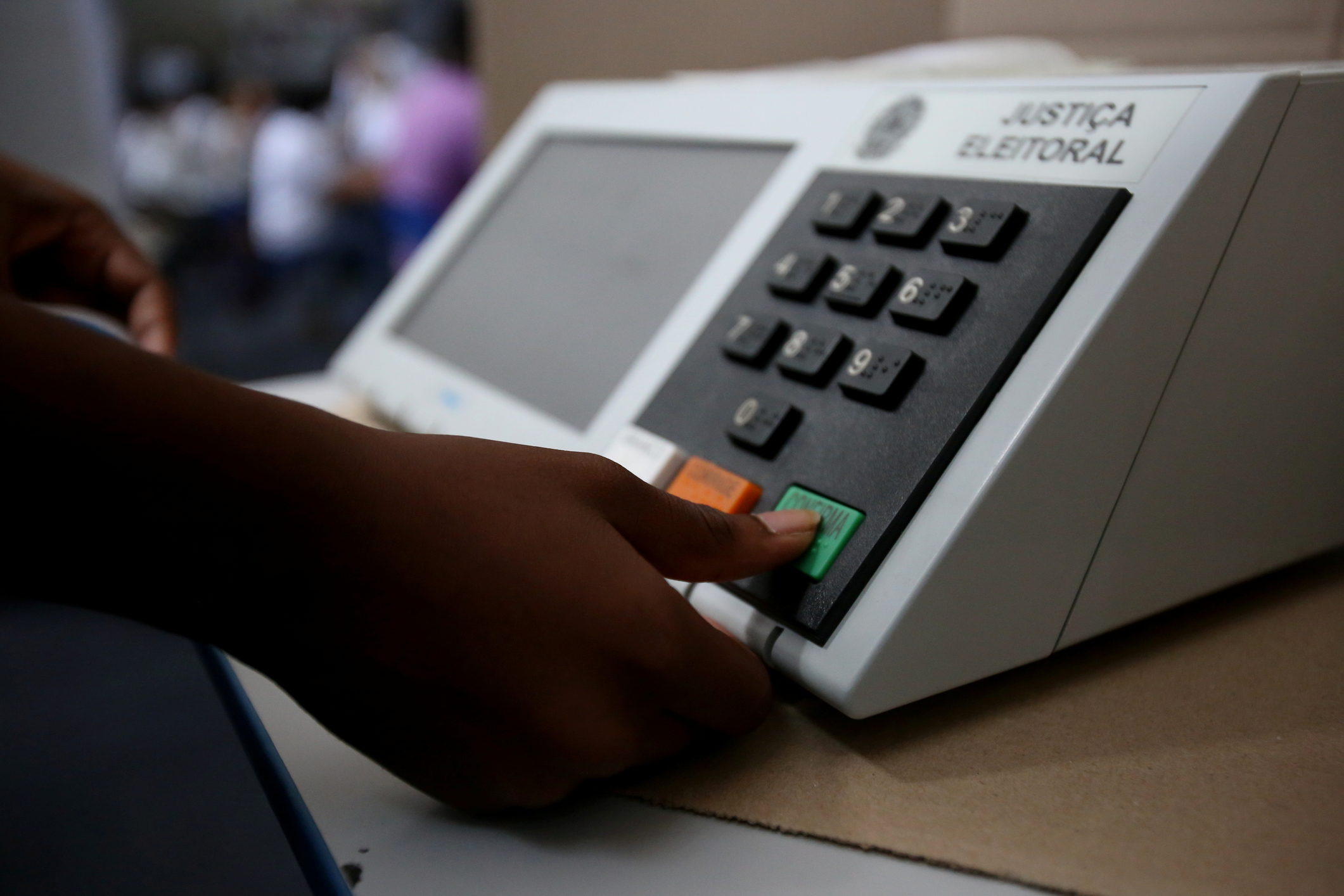
Despite dire predictions, Brazil’s first round of elections proceeded smoothly and concluded without hitches. The country’s election system proved to be up to scratch as it was able to count over 100 million votes by midnight, enabling poll authorities to publish results online without delay.

A mission formed by observers from the Organization of American States (OAS) has released a report lauding the “orderly and normal manner” of the vote.

“The mission salutes the people of Brazil, who turned out to vote yesterday, Sunday, to express their will in a peaceful and democratic manner. Under a highly tense and polarized atmosphere, Brazilian citizens showed maturity and civic commitment,” the report said.

Similarly, markets were upbeat about first-round results. In a note to investors, J.P. Morgan sounded guardedly optimistic about the polls.

"The risks around political polarization, with non-acceptance of the ballot results must be monitored, but so far there have been no notable events to report," it said.

The undramatic polls contrast markedly with the gloom and doom scenario being painted by incumbent president Bolsonaro during the run-up. It might be recalled that Bolsonaro went after the election system hammer and tongs, relentlessly questioning its credibility, and warning of widespread unrest should he lose.

Analysts had feared that Bolsonaro’s polemics was a dangerous tactic to hold on to power, as the incumbent had trailed his rival, ex-president Luiz InĂ¡cio Lula da Silva, in all pre-election surveys. Yet Bolsonaro mustered 43.2% of the votes to Lula’s 48.4%, an impressive showing for the perceived underdog. Under Brazil’s election laws, if no candidate gets 50% of the vote in the first round of voting, a runoff election between the highest scoring candidates will be held.

Analysts note that the stronger-than-expected showing of Bolsonaro had seemingly silenced his rhetoric against the voting system. With the prophesied anomalies turning out to be duds, the whole narrative appeared to have been defanged.

Bolsonaro’s sudden silence on the matter is likely to be taken by the public as a walk back and an acknowledgement that the election system he had been denouncing in fact works. This tacit retraction could prove crucial to the country’s post-election stability as Da Silva, despite failing to score an outright win, still pulled 6,000,000 more votes than Bolsonaro, and enjoys an advantage going into the taut mano-a-mano matchup set on Oct. 30.

Wednesday, July 6, 2022

Presidential candidate in Brazil to seek own voting system audit

In the feverish run up to the Brazilian elections in October, President Jair Bolsonaro is seeking an audit of the voting system, a move that comes after the embattled leader had relentlessly questioned the credibility of the country’s voting systems.

“As allowed by electoral law, we will hire a company to do the audit,” Bolsonaro said.

“People want transparent elections in which the vote is effectively counted for their candidate.”

The president’s sweeping claims had been met with backlash, the most furious of which had come from Brazil’s Supreme Electoral Court judges who had flatly refuted Bolsonaro’s allegations and categorically declaring that Brazil’s electoral system is free of fraud.

Luis Barroso, president of Brazil’s Supreme Electoral Court, once fired back at Bolsonaro saying “threatening the realization of an election represents anti-democratic behavior. Polluting the public debate with disinformation, lies, hatred and conspiracy theories represents anti-democratic behavior.”

Surprisingly, Bolsonaro appears to have made a fatal misstep as a recent Genial/Quaest opinion survey shows that his bombastic attacks on the voting system is turning off moderate voters. Furthermore, despite the vitriol spewed against the voting system, trust of electronic voting machines among Brazilians has increased to 22% of the electorate from a low of 27% in September, the survey revealed.

More alarmingly for Bolsonaro, the poll also showed that voter support for him dipped after three months of gains against former Lula.

The survey indicated that if the elections were held in April, Lula would have won 46% of the votes against 29% for Bolsonaro. Lula is on track to reaching 50% of the votes and winning the election right in the first round, according to the survey. In case the contest goes to a second-round runoff, the survey said that Lula would defeat Bolsonaro by 54% versus 34%.

"Voters believe the president is wrong to confront the Supreme Court, to question the credibility of electronic voting machines," said survey director Felipe Nunes.

Moderate voters are the swing votes that could be key to winning the election because most supporters of Bolsonaro or Lula have already decided who they will vote for.

Monday, March 18, 2019

Brazil election system: From paper ballots to e-voting giant


By the end of the last century, there was a deep-rooted public outcry regarding electoral justice across the world. This urge bore the need for electronic voting, a technology solution ensuring transparency, accountability, and security in election processes.

Brazil was among the pioneer nations that embraced e-voting. Voting was made compulsory with the introduction of electronic voting in 1996. Fast forward twenty-three years, and there are many lessons we have learned from this South American giant.

Grim beginnings
The Brazilian system was secret balloting whereby votes were cast individually on traditionally printed ballot papers. Over time, analysts and skeptics alluded that the traditional scheme of voting had massive flaws that rendered the electoral process shambolic.

The paper voting system and the ballot boxes proved untrustworthy. The paper-based manual system demanded intensive workforce which drew significant amounts in compensation, even if it did not ensure the accuracy and credibility of the process. Similarly, there was no possibility to reuse or recycle paper ballots.

The system was characterized by massive destruction of votes as well as manipulation during tallying. Besides, the traditional method of voting was tedious, and many citizens avoided participating. For instance, people who lived far away from the voting booth would skip voting, compromising on the turnout expected. This shortcoming also created a leeway for electoral fraud and malpractice such as bribes for people to take part.

Something had to change. It was for many of these reasons that electronic voting was proposed and implemented.

The election technology transformation

Elections around the world are increasingly relying on technology to make them more transparent and efficient. Technology is easing many election-related processes ranging from registration of voter IDs to announcement of polling stations, counting of votes to online results publication and many other things.

By the year 2000, Brazil was already conducting elections using digital ballot boxes nationwide. Nowadays, the country has over 460,000 electronic voting stations, which help to increase the number of voters each year, at around six percent.

Since the introduction of e-voting, Brazil has witnessed a significant reduction of barriers to democratic participation, particularly among the less educated electorate. For example, electronic voting has eliminated many reported difficulties for writing paper ballots.

The machines are being modernized with each passing election to develop a user-friendly and straightforward interface so that illiterate voters can also easily use them. They have also isolated the machine from communication devices, dedicating them for only voting purpose, for reducing the chances of external hacking. In addition to the installation of fingerprint readers in the digital machines, the Brazilian government is also working to equip them with face readers.

The paradigm shift from traditional paper ballots to electronic voting in Brazil has further established mainly positive effects stemming from abating spoiled votes together with the enfranchisement of lesser socio-economic status electorates.

Brazil has gone a long way in its election technology journey. It has already set an excellent precedent for other democracies, even though there is -and there will continuously be- room for improvement to enhance its electronic voting solution.

Monday, November 5, 2012

Technological solutions to the problems of voter authentication

Voter authentication was successfully
used in the last Venezuelan elections. Source: EFE
A report called What Has Changed, What Hasn't, & What Needs Improvement, covering different topics on the state of the US voting system, and how technology can contribute to improve election administration, was recently made public by the Caltech/MIT Voting Technology Project. The pool of authors, which includes scholars, students and prominent guest participants, compiled a vast amount of research material which we will review in future posts as we find it to be perfectly aligned with our vision of what technology can do to guarantee transparency, accuracy and efficiency in elections.

To begin with, we would like to go over two topics mentioned in this research project: Voter registration and authentication. Both issues, in light of the upcoming November 6th, 2012, US presidential elections, and their importance in guaranteeing the integrity of any election, are currently under public scrutiny.

According to the study, in the 2008 presidential elections, "between 1.5 million and 3 million votes were lost due to problems related to voter registration". Such low accuracy levels should be unacceptable for the US voting system or any consolidated democracy.  

The Caltech/MIT study listed some of the most crucial aspects of an election that are based on a thorough voter registration process and a sound electoral roll. They are: knowing the exact number of registered voters; developing basic administrative geographies such as legislative redistricting and the determination of voter precincts; distributing electoral material; and authenticating voters to deter fraud.

The study points out the necessity to upgrade electoral rolls by using advanced technological solutions and incorporating new technology available, such as the Internet, to comply with the increasing demand for fair and transparent elections.

The report stresses how the Internet has gained grounds as the preferred method to develop robust electoral rolls, and facilitating voter registration. Arizona and Washington have implemented successful internet-based registration systems and as consequence, they have given an impulse to registration rates, lowered costs and increased usability and accuracy.

Given the importance electoral rolls have, during the year 2002 the Help America Vote Act (HAVA) mandated that states implemented statewide computerized voter databases. Unfortunately, not all states have complied. Statewide electronic databases can prevent duplicity (having a voter registered in two precincts) and many other pitfalls usually found in registers.

Other technologies can also contribute enormously in this area. For example, electronic poll books can bring the electoral polls down to the precinct levels and facilitate information to the electorate and voter authentication.

Voter authentication, which is predominantly done by requesting voters to show an ID at the polling station, is at this very moment tangled in a partisan debate. Republicans demand a stricter control of who gets to casts a vote by requiring photo IDs at the polling stations, while Democrats argue that such measure undermines voter participation of minorities as they are less prompt to possess driver licenses or other forms of IDs. Authorities are confronting the challenge of getting the largest possible number of eligible voters express their opinion, without compromising integrity.

The study wisely states "the burden for preventing voter fraud should be placed mainly on the state, not voters". One solution to this dilemma is the use of biometrics for the authentication processes. Brazil, a nation with a robust electronic platform, used biometrics in some cities to authenticate voters with fingerprint based devices. Recently, Venezuela, another country leading the way in automation, became the first nation in the world to automate an election when included a biometric device to authenticate all the voters and initiate the voting session. The solution, provided by Smartmatic, guaranteed the quintessential democratic principle of one voter, one vote.

As a blog advocating for the implementation of the electronic technologies to strengthen modern democracies, we are convinced that, if a polling station has a reliable electronic poll book with a robust database which includes biographic and biometric information of every eligible voter in, and the voters are authenticated by means of a fingerprint-based biometric device, both problems can be solved and election integrity and legitimacy guaranteed.

Wednesday, September 26, 2012

USA vs. Brazil – Two models of election administration

Brazil will have municipal elections next month
(Ricardo Moraes/Reuters)
Brazil and the United States of America are the two most populated countries in the Western hemisphere. Between them, they add up to more than 510,400,000 million people, out of which approximately 380,000,000 are of voting age. Together with India, they formed the pioneering triad in the adoption of voting technology during the last score of the previous century. Another curious similarity is the fact that each of both nations is a federation of states with a republican form of government, which implies that the different states forming these republics have a considerable amount of sovereignty.  

In spite of coincidences, the way these republics conduct elections is radically different. The long debate between centralization vs. decentralization of the public administration is easily palpable when analyzing the way in which elections have been carried in Brazil and the US for the last twenty years. 

Since its founding fathers joined efforts to declare independence in 1776, the United States has made of the empowerment of each province, county, jurisdiction, or state to decide its future a point of honor. As a result of the decentralization of decision making, the nation has approximately 4,600 jurisdictions administering elections. Each State has its own rules as to how to best register voters, who is eligible to participate in elections, what the voting system is to be used, etc. Ten years ago, the country was using simultaneously all of the available technologies across the 51 States: punch cards, lever machines, optical scanners, and direct recording electronic voting machines. Vendors had scarce parameters to follow, and election officials lacked the preparation or necessary training to properly manage their relations with technology providers. As time passed, the US electoral administration system showed significant weaknesses. For example, during the 2000 General Election, the country had to wait over a month to have the Supreme Court declare the winner.  This incident triggered considerable reforms from Congress and the White House. To enhance accuracy, efficiency and transparency of elections, the Help America Vote Act was signed into law by President Bush in 2002. As a result, punch cards and lever machines were replaced with better technology; access to voting was improved for citizens with disabilities, and the Electoral Assistance Commission (EAC) was created. This step towards centralization (EAC) has rendered positive results, but since the EAC can only make recommendations to jurisdictions and states, and cannot force them to comply, the impact has not been sufficient. 

In the other side of the spectrum appears the giant from the South. Brazil chose to centralize decision making for election related matters as early as 1932. Since, a single authority has overseen the compliance with laws and regulations across the 16 states that comprise the federation. This high degree of discretion paved the way for seamless election automation in Brazil. The Tribunal Superior Eleitoral (TSE), Brazil's highest election administration agency, introduced computerized tallying of results in 1982, automation of voter registration in 1985, and adopted a unique Electronic Voting platform for the entire nation in 1996. Critics of the Brazilian election administration system point out the lack of sufficient citizen participation in decision making. Several studies have been signaling the need to upgrade voting machines to include a Voter-Verified Paper Trail. The printing of a receipt reflecting what a voting machine has recorded, would allow voters to verify that their choices are duly registered and counted accordingly.

The centralization vs. decentralization debate is far from over.  However, when it comes to election administration, the general tendency is to centralize decision making. Venezuela, which is another country with remarkable developments in terms of automation and conducting elections, can be an interesting case to study. The Consejo Nacional Electoral is a government agency with a rank theoretically as high as that of the Judiciary, Legislative, or Executive powers. With such preeminence of the electoral agency, and due to the highly auditable end-to-end automated election system in use, Venezuela has dramatically improved the transparency, accuracy and efficiency of its elections.

Wednesday, October 5, 2011

The History of E-Voting in Brazil

Picture: alexdecarvalho
Some people have said that Brazil is ahead of its time when it comes to the country's electoral process. Indeed, the South American nation is widely regarded as a leader when it comes to electronic voting, but it's not like Brazil suddenly fell into this role overnight. The evolution of e-voting in Brazil has taken place over the last couple of decades with each progressive step moving into greater levels of both security and automation.