Showing posts with label presidential election.. Show all posts

Tuesday, August 4, 2020

Anti-technology groups endangering future of elections in the Philippines


In May 2022, voters in Philippines will go to the polls to elect their new president and other national and local officials.  For this general election, the country is set to use for a fifth time its automated election system, which it has adopted with great success since 2010. 

Popular opinion is that automation has resulted in a pronounced improvement in the credibility of elections, which had historically been marred by controversies due to the slow manual count and the susceptibility of the manual system to manipulation. In a 2019 survey, leading pollster Pulse Asia found out that 84% of Filipinos trusted election results and an overwhelming 91% wanted automated voting in future elections.

But despite the success of poll automation, some small yet loud anti-technology groups have somehow influenced lawmakers to file bills seeking to junk the system in favor of a so-called hybrid method, which purportedly blends manual and automated modes of voting. 

Election experts have been quick to warn that hybrid is just manual elections couched in technology speak, and represents  a significant downgrade that could set off a dangerous backslide toward the dark ages of  the flawed manual elections.
Election watchdog Democracy Watch said in statement that “adopting a hybrid vote counting system in 2022 is a step back for the Philippines in its journey towards transparent and credible elections.”
 
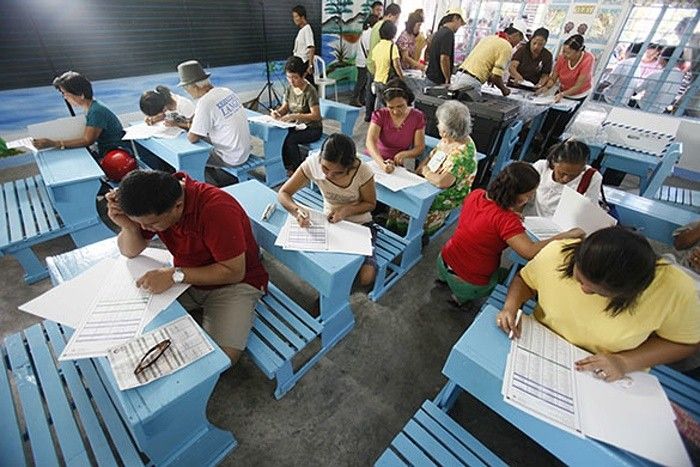
During an end-to-end demonstration at a school in Cavite, a province just south of the capital Manila, the system proved unreliable and inefficient. Witnesses were one in observing that moving back to manual counting, as implied under the hybrid system, would be a significant setback.
 
After the test, lawmaker Rep. Edgar Erice stated “I don’t think [hybrid system] feasible. The test run was not successful. I maintain that the law requires automation both in the precinct voting and transmission.”

Fredenil Castro, Capiz Representative and then House electoral reforms committee chair, stated that the hybrid system test was "miserably [unsuccessful] to even closely match the advantages of a fully-automated election."

As the elections inch closer, all eyes are on the Philippine legislature as it debates the hybrid bill. Will it pass a law supplanting automated polls in favor of the untried hybrid system thereby risking a regression to the benighted days of manual? Or will it uphold the successes of the past four elections and retain the automated election system to ensure that the 2022 polls are marked with transparency and credibility?

The future of Philippine democracy may very well be hinged on this.

Monday, February 9, 2015

The ongoing push for e-voting in the UK by 2020

The United Kingdom has a long and storied history that is steeped in tradition, but hanging on to the past for tradition and nostalgia's sake alone could potentially be quite harmful for maintaining a modern democracy in the generations to follow. The case has been made again and again that e-voting, Internet voting or some combination thereof should be introduced in the United Kingdom for its elections moving forward. 


This isn't only coming from analysts, pundits and journalists either. A recent report by the House of Commons on the state of UK voter engagement has made the recommendation that pilot projects for electronic voting and online voting should be launched in parliament and that the option for Britons to vote online should be widely available by 2020. That gives legislators and government officials five years to put the system in place and have it ready for the mass public. 

As has been cited before, Internet voting could provide several benefits, one of the most notable of which is to encourage more engagement by young people in politics. Nearly everyone is already on the Internet on a daily or a near-daily basis, but they may not necessarily be as motivated to vote. By offering an online option, they may be more inclined and this will help to improve overall voter turnout while still offering in-person options on Election Day using paper ballots or, better still, direct-recording electronic voting machines (DRE). 

E-voting and i-voting could encourage higher voter turnout particularly among youth voters, many of whom are increasingly disinterested and discouraged by the political world. The simple act of digitizing elections and allow for online voting could make politics relevant for this important demographic once again. Columnist Richard Wood of Here Is The City Politics also cites the cost savings in the reduction of printing paper ballots, as well as well as the reduction of the impact on the environment as a result. 

There are challenges to overcome, to be sure, including maintaining the security and integrity of the vote, but the benefits are numerous as well. Edie Lush of British publication The Week is also a supporter of e-voting and i-voting in the UK. In particular, she outlines how an electronic-based voting system—whether that involves online voting, electronic voting machines, or electronic ballot counting machines—could expedite the election process significantly. 

She uses the recent election in the Philippines as a prime example of this. It once took 40 days before the election results could be reported, but after e-voting was implemented, the full tabulation was completed in a mere 48 hours. She asks why the UK cannot be “as smart as the Philippines” in this regard. Like many others, Lush also cites the glowing example of Estonia with its innovative and trend-setting system of electronic voter verification and online voting. 

It was once said that the sun never sets on the British Empire. The United Kingdom is a great world leader, but if it does not modernize its elections with electronic and online technologies, it could become a relic of the past rather than a glowing prospect of the future.