Tuesday, October 29, 2024

If You Can’t Be Fast, Prebunk


Why Speed Matters for Voter Trust, but Proactive Messaging Can Save the Day

Election night in the United States has become less a climactic revelation than a prolonged waiting game. In 2020, four days passed before the winner was declared the winner, and in 2022, control of Congress remained uncertain for over a week. These delays—caused by legitimate procedures like verifying mail-in ballots—feed a growing distrust in elections. But does the delay itself erode trust, or is it the vacuum of information during this time that allows skepticism to fester?

A study of nearly 10,000 Americans offers a critical insight: delays in vote counting do harm trust, even without deliberate efforts to misinform. Yet, there’s a powerful vaccine—prebunking. By educating voters beforehand about why accurate results take time, election officials can temper much of the distrust that delays might otherwise create.

Delays in announcing election results create a fertile ground for doubt. Voters accustomed to rapid results may interpret delays as incompetence—or worse, malfeasance. In recent years, political rhetoric has amplified these concerns, with claims of fraud tied to slower counts. Even when these claims are baseless, they tap into preexisting fears, particularly among partisans.

The study reveals that simply informing voters about a delay reduces trust by 6.5 percentage points. For Republicans, already primed by narratives of election fraud, the drop is even steeper—nearly 10 percentage points. This effect occurs without any mention of fraud, underscoring that the delay itself, paired with a lack of context, is enough to seed doubt.

Prebunking—providing accurate, anticipatory information—acts as a vaccine against distrust. The study tested a 40-second video from Arizona’s Secretary of State that explained why counting ballots takes time and emphasized the importance of accuracy. The results were astounding: viewers of the video were significantly more likely to trust the election, even if they later learned about delays.

Among Republicans, who exhibited the sharpest drop in trust due to delays, prebunking restored most of their confidence. The key lies in its timing—by addressing concerns before they arise, prebunking prevents misinformation from taking root and shapes how voters interpret delays.

Much is to be done to reduce these long waits. Legislators should address policies that exacerbate delays, such as prohibiting early ballot processing. Allowing election workers to verify and count mail-in votes before Election Day can shorten the timeline and reduce opportunities for distrust.

Second, election officials must embrace prebunking as a standard practice. Simple, low-cost videos explaining the ballot-counting process can have outsized effects. These messages are especially impactful coming from trusted local officials rather than faceless institutions.

In a time where speed is often equated with competence, delayed election results will always invite scrutiny. But delays need not erode trust if voters understand their purpose. By prebunking, election officials can bridge the gap between integrity and perception, ensuring that democracy remains credible—even when it takes a little longer to count.

Friday, October 25, 2024

Just What Makes the U.S. Elections Tick?


Like clockwork, Americans gird for their presidential elections every four years, an impressive undertaking that combines time-honored traditions with contemporary nuances. The 2024 presidential election is the 60th presidential race since the nation’s founding in 1788. Subsequently, the U.S. has elected its president in the prescribed time without fail, a custom that has weathered time and occasional turbulence, and has given the rest of the free world an enduring gold standard in the democratic transfer of power.

Decentralized System

One curious fact is that while most countries have centralized electoral systems, the U.S. election infrastructure is a vast network of over 10,000 jurisdictions. State and local authorities are autonomous, setting their own rules, processes, and technological solutions. One may indeed wonder how this fragmented approach can even work, but an army of 800,000 poll workers ensure that millions of votes are cast and counted accurately across these jurisdictions.

Electoral College

Winning the White House requires navigating the byzantine terrain of the Electoral College, another feature unique to the U.S. With 538 electoral votes up for grabs, candidates must secure at least 270 to win. While most states are “winner-takes-all,” Maine and Nebraska are outliers, using the Congressional District Method that distributes their votes proportionally, which add more layers of complexity and unpredictability to the race.

Key Dates

The U.S. election is governed by important dates, as follows:

· Election Day: The first Tuesday after the first Monday in November, an unbroken tradition since 1845.

· State Certification: Within a week to a month post-election, states finalize their results.

· Electoral College: On the first Monday after the second Wednesday in December, electors cast their votes.

· Congress Certification: January 6 sees Congress officially count and certify the electoral votes.

· Inauguration Day: January 20 marks the swearing-in of the new president, ushering in the next chapter of leadership.

Ballots

American voters today have a variety of options at the polling booths:

• Hand-Marked Paper Ballots: About 70% of voters still opt to use these ballots that blend tradition with tangible verification.

• Ballot Marking Devices (BMDs): Used by about 25% of voters, BMDs offer a digital edge to the voting process.

• Direct Recording Electronic (DRE) Systems: Accounting for 5%, these systems streamline vote recording, processed primarily through optical scanners for efficiency and accuracy.

Turnout

Voter participation has been on an upswing, peaking at a 66% turnout in 2020—the highest since 1980. With some 246 million voting-age citizens, the electoral landscape is dynamic, especially with more and more states enabling same-day registration, lowering barriers and empowering the electorate.

The U.S. election process is an interesting interplay of historical precedence and adaptive innovation. Rooted deeply in the nation's democratic ideals, it remains innovative enough to meet the evolving needs of its citizens. As technology advances and societal values shift, the American electoral system remains a testament to the indomitable spirit of the United States.

Monday, July 29, 2024

Venezuelan Election Result Sparks Legitimacy Concerns


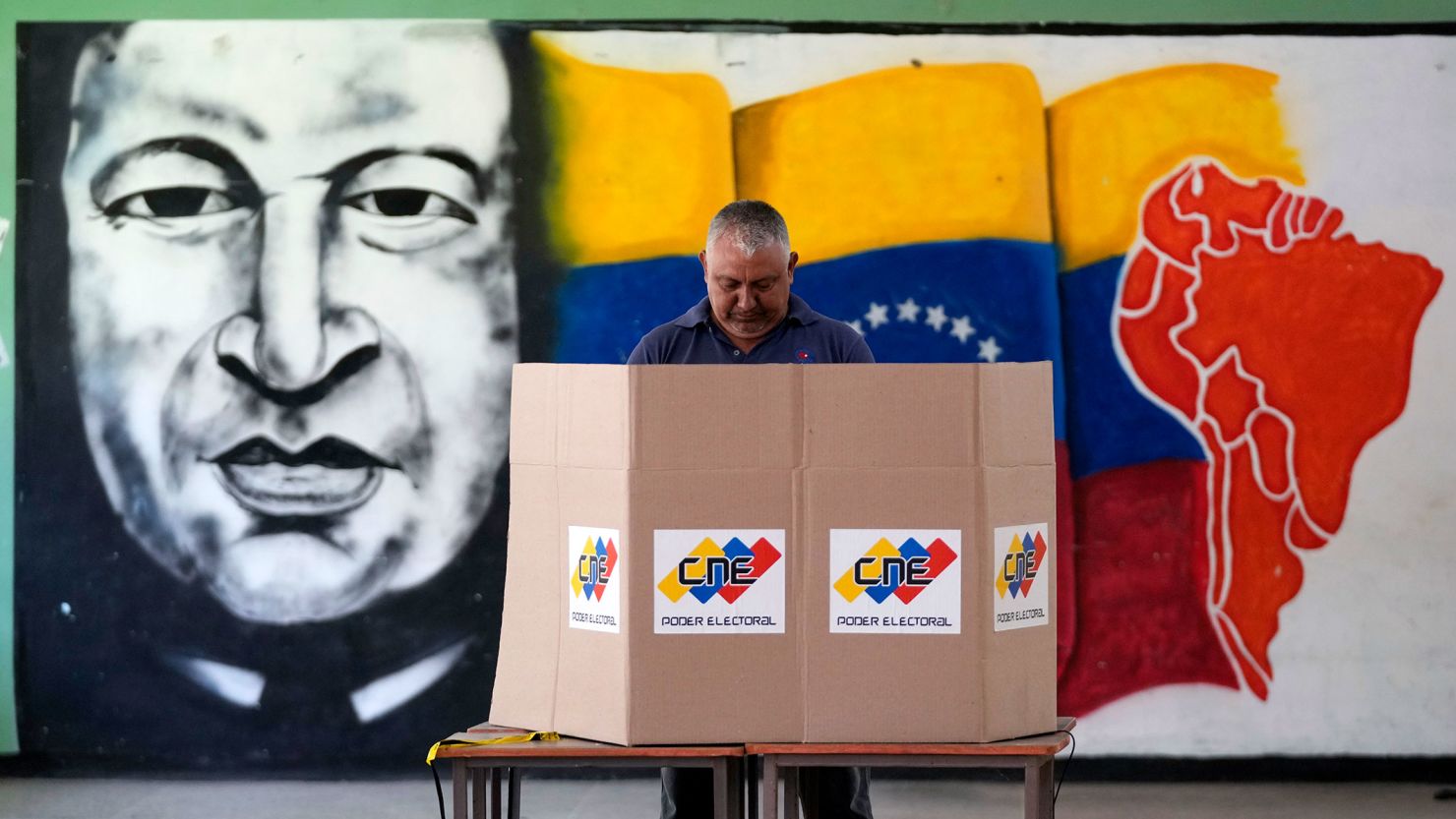
Venezuela’s National Elections Council (CNE) rushed on Monday, July 29, to proclaim Nicolas Maduro president for the next six years following presidential elections that had been hailed as among the most significant in the Americas in 2024. However, the election's legitimacy remains heavily disputed by opposition leaders, observation missions, and diplomatic envoys from the region.

In a swift and controversial move, the CNE declared Maduro the victor without publishing a single tally report on its website, a practice it had followed in almost every election since 2004. This unprecedented action has cast a shadow over the transparency and fairness of the entire election process. According to the initial bulletin issued early Monday morning, 80% of the tally reports had been processed at that time. If the CNE had already received this high percentage of the tally reports, why didn't they make them available on their website?

The CNE’s deviation from established transparency protocols marks a significant break from the practices it had followed since the onset of electoral automation nearly two decades ago. Since 2004, Venezuela had cultivated an electoral culture that included thorough audits before, during, and after the election.

Before these presidential elections, the CNE announced a series of 12 audits to ensure the election's legitimacy, but it failed to follow through. Essential processes to create a paper trail that would validate the results were omitted.

Unlike previous elections, where political actors received tally reports from every single voting machine and could compare these copies with the results published on the CNE website, this vital validation was not possible.

According to Omar Barboza, coordinator of the Unitary Platform, the opposition was denied copies of the voting records in nearly 70% of the voting centers on the night of the election. Additionally, 24 hours after announcing the results, the CNE had not published results by polling station, preventing political actors, observation missions, and the public from verifying the legitimacy of the declared results.

Once lauded by former U.S. President Jimmy Carter as “the best in the world,” Venezuela's voting system has seen a dramatic decline in credibility, particularly after the CNE severed ties with its long-time technology provider, Smartmatic. Under the current provider, Argentine-based ExCle, elections have become increasingly controversial, culminating in the latest election.

In 2020, the U.S. Office of Foreign Assets Control (OFAC) sanctioned ExCle for assisting Nicolás Maduro in conducting fraudulent elections. ExCle is known for its close connections with key figures in the CNE and the regime.

The rushed proclamation of Maduro, coupled with the CNE’s departure from established protocols, has led to widespread skepticism and calls for a thorough investigation. The international community and Venezuelan citizens alike await further details to understand the full extent of the election's irregularities.

Wednesday, April 17, 2024

The Role of Technology in India's 2024 Elections


India's 2024 general elections, commencing on April 19th, are once again setting the stage for a formidable demonstration of democratic spirit and technological sophistication. With the country's nearly 970 million eligible voters called upon to cast their votes, the role of technology remains pivotal in orchestrating the successful execution of the electoral process.

The colossal task of gathering votes from a populace that exceeds the combined voter base America, Europe and Australia combined is a testament to India's logistical prowess. Around one million polling stations have been meticulously established, ensuring adherence to the rule that no voter should have to travel more than 1.2 miles from their home to vote. This network spans across congested urban landscapes to the most secluded rural locations, bridging distances with an array of transportation means that goes beyond the conventional.

For these elections, authorities will deploy some 5.5 million electronic voting machines (EVMs), facilitating a smoother and more secure voting experience. The initiation of the voting process on April 19th sets into motion a carefully structured six-week electoral period where the seven phases of voting cater to different regions systematically.

EVMs, engineered by public sector units under the Election Commission's guidance, represent a monumental step forward from paper ballots. In addition to mitigating the risk of fraudulent activities that were a concern with paper ballots, EVMs have streamlined the voting process by enabling faster, more efficient counting and reducing the likelihood of human error.

With the integrity of elections at stake, VVPAT systems serve as a critical layer of transparency, allowing voters to verify their cast votes. Initially trialed in 2014 and subsequently mandated for all elections post a 2019 Supreme Court ruling, VVPATs accompany all EVMs, their slips subject to meticulous scrutiny. This ensures that a tangible, auditable paper trail complements the electronic count.

Beyond the palpable benefits such as cost savings and expeditious counting, the use of EVMs has fortified election integrity. These machines, devoid of internet capabilities, stand as bastions against cyber threats while providing a reliable, user-friendly interface for India's diverse voter base.

As the final votes are cast and the polling stations close, the EVMs' stored data awaits the nationwide counting process. Votes will be tabulated and cross-verified with VVPAT slips where necessary, ensuring the sanctity of every single vote. India's Election Commission, armed with hi-tech tools and robust procedures, promises to deliver fair and swift election outcomes.

With the votes poised to be counted in the aftermath of the six-week-long electoral marathon, the world is set to witness not just a political transformation, but a landmark event where technology unites a billion voices in the symphony of democracy.