Showing posts with label Philippines Midterm Elections. Show all posts

Thursday, June 20, 2019

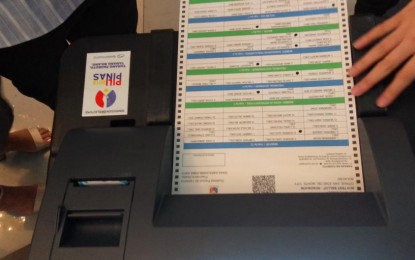
Impartiality of automated election systems making a difference in Philippine polls


One hallmark of automated elections is the minimization of human intervention. This contrasts starkly to manual elections where human subjectivity is found at every stage, exposing the vote to too many points of failure.

The impartiality of an automated elections system is rooted in the fact that it makes no distinction between who wins or loses. If has been said that if the system cares about anything at all, it is to count votes correctly.

This was all too evident during the National and Local Elections held in May where politicians from across the political spectrum praised and questioned the results. While the noise seemingly argues against automated elections, perceptive observers point to this as solid evidence that the automated system is completely impartial and merely counts votes accurately with no regard for winners and losers.

After Election Day, an obligatory Random Manual Audit (RMS) was conducted. The audit established that the electronic count matched with the paper ballots 99.9953% of the time. The results from previous automation do not vary much – every automated election in the Philippines has been marked with extraordinary accuracy.

This has led to a progressively declining number of protest cases being filed. In the Philippines, as in many other countries, losing candidates have the right to file a protest to review and audit a specific contest. Interestingly, not one election protest filed under the automated system has resulted in a reversal, further attesting to the impartiality and accuracy of the system.

Moreover, the impartiality of the automated elections system has resulted in more peaceful elections in the Philippines. The country has had a long history of election-related violence under manual elections where poll workers have been coerced and killed in the line of duty.  

The cold and dispassionate automated election systems has, in effect, doused cold water on the overheated Philippine election scene. Unlike manual, which is interminably long and is subject to human weaknesses, the counting in AES is over before things can even start to heat up.

The Philippine experience has been showing how technology can be harnessed to improve elections. It is high time the world takes notice and take a page from this election automation trailblazer.

Thursday, January 29, 2015

Election automation in the Philippines: a snapshot

taesmileland / freedigitalphotos
During the last few months, the Philippine Commission on Elections (Comelec) has been selecting election technology and service providers for the 2016 general elections. As is customary in this country, the process has sparked all kinds of controversies.

One of the latest controversial episodes occurred on Tuesday's hearing of the House Committee on Suffrage and Electoral Reforms. Under intense questioning from Caloocan Representative Edgar Erice, Carlos Suarez, vice president of Indra Sistemas – a bidding company–, was forced to admit that the Government of Spain, through Sociedad Estatal de Participaciones Industriales (SEPI), is the single largest shareholder of the company.

Erice pressed Indra on the ownership issue saying that he is concerned that a foreign state might interfere with the country's elections. "I understand that it's normal for states to have a majority stake in companies. But it's a different matter if we're talking about elections" he said. Erice was seconded by Rep. Terry Ridon, who said that the matter is "cause for concern", and added:"We don’t want foreign state entities to be involved in our elections". If authorities reach a consensus over the inconvenience of risking a foreign government intervene in national elections, the Philippines would be left with only one choice to choose from the British company Smartmatic.

Besides the Spanish company, controversy is also spilling over to Comelec. For example, two poll watch coalitions accused Comelec of signing a “midnight deal” with Smartmatic for the diagnostic tests of the same 80,000 PCOS machines Smartmatic sold to the country in 2012. The fact that no contract has actually been signed to this day between Comelec and Smartmatic for such services, prompted authorities to slam those poll watchdog groups.

It is a shame that the institution responsible for the previous two successful automated elections has become the target of such aggressive campaign. Public administration should be thoroughly scrutinized, but unfounded accusations hurt the democratic ecosystem as a whole. Comelec has made mistakes in the past, just like any other public institution in the world, but it should also be credited for increasing the speed with which results are delivered and reducing post-electoral violence since automation. 

The latest two automated elections (2010-2013) have also been constantly hammered with criticism by certain watchdogs. However, these groups have not escaped controversy. Local Rep. Fredenil Castro, who chairs the House Committee on Suffrage and Electoral Reforms, scolded certain "interested" groups and "self-styled" experts for creating unwarranted "noise" about the ongoing bid even as he appealed to such groups not to cast aspersion upon Comelec's integrity and credibility.  "We should not allow this thing to happen because elections are of critical importance to our democracy.”

Addressing Evita Jimenez of AES Watch, which had been critical of the automated election system, Castro appealed for the group to refrain from attacking the Comelec without substantiation. "Unless they can substantiate their accusations, I urge these groups to exercise restraint in coming out with statements that put the Comelec in a bad light" Castro said, and concluded: "The Comelec safeguards our elections. If these groups attack the integrity of the Comelec, then it weakens out democracy because it places the legitimacy of the government under a cloud of suspicion."

Controversy is still in the air, and is likely to grow as the bidding processes gets into more decisive stages. We’ll keep you posted with another snapshot in due time. 

Tuesday, July 23, 2013

The self-interest problem: Why some people want a return to flawed manual elections


Image: http://www.liberadio.com

Electronic voting is the future of democracy. An ever-increasing number of countries around the world like Belgium, the US, Venezuela, Mongolia and the Philippines have seen their democratic institutions grow even stronger after abandoning the flawed manual elections and started benefiting from voting’s fast, accurate, and transparent results.

Still, more countries are either already conducting pilot tests or preparing enabling laws for a shift to e-voting.

With all the clear advantages of automating the elections, it does boggle the mind why anyone would still want to return to slow and fraud-ridden manual elections. Yet perhaps the key to understanding the puzzle lies in the very success of e-voting.

Automated elections make such an almost perfect job of eliminating fraud that the people who have made great fortunes rigging elections have suddenly been left holding empty bags, and very much upset.

In the Philippines, poll operators had, for decades, been making a living off politicians  employing the infamous “dagdag-bawas” (add-subtract) scheme, where the highest bidder can be made to win by addition of votes to his total and where the hapless opponent can be made to lose by shaving votes off his or her total.

In 2010, however, these fraudsters have been shoved out from the money train when the Philippines started automating its elections. They were out of jobs overnight. And they are not taking this sitting down.

Yet the legally-instituted e-voting system is not only facing attacks from these disenfranchised poll operators but also from a group headed by a disgruntled ex-commissioner of the poll body. This ex-official, reliable sources confirm, has long been trying to sell his own version of an election system. Unfortunately for this ex-official, his system is part-automated and part-manual, a hybrid that is expressly forbidden in the Election Automation Law of the Philippines.

This does not, however, deter this ex-official in pushing for his selfish agenda, and takes every chance he gets to cast doubts on the reliability and credibility of e-voting.

Many Filipino voters are crying foul over these selfish agenda threatening to undo the gains brought about by election automation. After all, automation brought political stability to the country, a development which directly caused investor confidence to soar at all-time high, and had also led to a surge in foreign and local investments. 

It was also no coincidence that Fitch and Standard & Poor’s have found it fit to upgrade the Philippines to investment grade. It was still less of a coincidence that the country’s economy grew 7.8%, making it the fastest expanding economy in Southeast Asia, even outstripping China’s 7.7% growth.

The stabilizing effects of e-voting in any country cannot be dismissed. It is up to concerned voters to be vigilant so as to ensure that their democracy is not put at the mercy of self-interests.