Showing posts with label south korea. Show all posts

Wednesday, December 26, 2018

Corruption scandal tarnishes A-WEB

Last April, former President Park Geun-hye, the first woman president of South Korea, was sentenced to 24 years in prison after having been found guilty of abuse of power. But the ex-ruler is far from being the only figure involved in this type of controversy. This year, South Korea has been the scene of major corruption scandals, which also include Kim-Yong Hi, current Secretary General of the Association of World Election Bodies (A-WEB), who is under police investigation for electoral corruption.

Kim-Yong Hi is being accused of exclusively favoring local firm Miru Systems Co., Ltd. in electoral assistance agreements signed by A-WEB under alleged "international cooperation". 

According to Kwon Mi-hyuk, representative of the Democratic Party of Korea, A-WEB and Miru System signed an illicit agreement to assist the official foreign aid projects from 2015 to 2017, when supposedly a public bidding process was to be held. However, the general secretary of A-WEB said the firm was the only one with the technical capacity to offer electoral technology in the region.

In addition to allegations of bribery, Miru is being questioned about the malfunctioning of its electronic voting devices. Their recent experience in Iraq, where the firm exported electronic voting equipment worth 135 million Dollars, ended in accusations of fraud and allegations related to flaws in the voting machines. Authorities were forced to carry out manual tallies in some areas of the country.

If that wasn’t enough, things keep getting worse for the Korean tech company. The scandal caused by the participation of Miru Systems in the Democratic Republic of Congo (DRC) elections -held on December 30- forced the former secretary of the South Korean National Electoral Commission, Kim Dai-Nyeon, to resign. In a press release he urged Kim Yong-Hi to also resign and blamed him for favoring the firm Miru Systems. 

Image by The Western Star. The DRC's Independent National Electoral Commission (CENI) showed off the device from Miru System to reporters on Feb 21.

At the beginning of November, press articles began to circulate stating that the Blue House had recommended appointing Kim-Yong Hi as a permanent member of the National Election Commission. Being a permanent member of the Commission gives the authority to determine what is right or wrong within the NEC. As a result, several representatives of both opposition parties and the government itself have been actively demanding an official explanation from the Blue House, and questioning the reasons that led it to ignore the police investigations in which the current secretary of A-WEB is involved.

Accordingly, the A-WEB office is inactive, after its budget of 4 million dollars was slashed to little less than 2 million after a NEC decision. Some representatives of the governing party have asked A-WEB's general secretary to accept his responsibility for his faults, and allow the organization to continue working, as since that budget cut many young people working for the organization were left unemployed.

Only time will tell what the future holds for A-WEB.

Thursday, December 31, 2015

E-voting in South Korea expanded to corporate world


The adoption and widespread implementation of electronic voting technology in the election of government officials, presidents and other elected officials can oftentimes be hampered by the bureaucracy and party politics of public office. The technology is already here and it's ready, but some politicians are hesitant to that sort of change. And this is why some of the best advances may be coming from the private sector.

The private sector is inherently more agile and quickly adaptable to change than the public sector. Major corporations and multinational companies in particularly can reap many benefits from using e-voting technology within their own decision-making infrastructure. In the case of South Korea, it has now been announced by the Korea Electric Power Corporation (KEPCO) that it will adopt electronic voting for its own internal processes.

Part of the motivation behind this move, according to an article in Business Korea, is to “act as a stimulus for the enhancement of voting rights of shareholders.” In many ways, the shareholders in a company are not dissimilar from the citizens of a particular country. The decisions made by executives and elected officials affect the shareholders and citizens directly, and thus the shareholders and citizens want to ensure that their opinions and preferences are heard.

KEPCO is not the first company in Korea to make this move, as some 452 Korean companies have already adopted e-voting as part of their own practices. This is according to the Korea Securities Depository and it reflects an astronomical increase compared to just 79 companies at the end of last year. This still only represents 19 percent of companies in the KOSPI and 24 percent of companies in the KOSDAQ, so much more progress needs to made among public companies in Korea to implement electronic voting.

The positive trend toward the higher adoption of e-voting among corporations and public companies is also being reflected in other parts of Asia. More specifically, e-voting was mandated for listing companies in Taiwan earlier this year. The popularity of e-voting in the private sector is growing and will quickly become the norm.

For elections in the South Korean government itself, progress has been slower. The country's people are generally more conservative in nature, though it did elect its first female president two years ago. This demonstrates some inclination toward a more progressive mindset, one that would be more amenable to the adoption of e-voting for public elections too.

At this time, elections in South Korea do not use technology for voter registration purposes, nor is an e-voting system used in elections for public office. It's quite possible that the growth of e-voting in the private sector, as demonstrated by KEPCO's announcement, will help to spur further development in the public sector too.

This is in addition to tests and demonstrations of e-voting in recent years that have further illustrated that Korea, a country rich in tradition yet definitely on the forefront of innovation with such heavy hitters as LG and Samsung, is ready to adopt e-voting on a more public context. It's ready to move into the 21st century.


Wednesday, January 2, 2013

Conservative South Korea elects its first female president

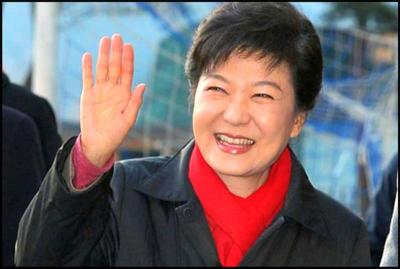
Park Geun-hye. Photo: The Star.

2012 was a year for elections in many countries around the world, and East Asia was no exception. Taiwan, Japan, and Korea called their citizens to the polling stations, with Korea being the most remarkable case as it elected a woman president for the first time in its history.

Park Geun-hye won the December 19 elections with 51.6% of the votes, the largest percentage ever gotten by a presidential candidate in the country. She is also the first woman to be elected president of Korea in all of the country’s constitutional history, and the second woman to rule the nation since Queen Chinsong from the Unified Dynasty (BC 57 – DC 935). Besides, Park’s election marks the first occurrence of a father and daughter having assumed the presidency in Korea, as her father, Park Chung-hee, was the mastermind behind the economic miracle that took the country out of post-war poverty while in power in the 1970s.

In a way, this is the triumph of progress and gender equality in a conservative, male-dominated society. However, Park Geun-hye’s landslide victory is mostly related to the nostalgia that older voters have for the so-called “Han River Miracle” led by her father. As the population ages, citizens in their 50s and 60s recall the stability and financial development they experienced during the 70s in spite of an often brutal regime, and their sentiment reflects on the way they vote. In this occasion, this bout of longing conservatism led to an unprecedented 89.9% turnout rate for this age group. Meanwhile, younger voters, ever fewer due to the current low birth rate in the country, demand political change but are becoming too few to be heard. This demographic tendency is turning Korea into a long-term conservative nation, as the rapid growth of the older population means that this age group will very likely be choosing the next president and the one after that.

In spite of the generational gap and its implications for the future of Korea, the 2012 presidential elections were a healthy exercise in democracy where the people intended for a woman to be given a chance to govern this country after centuries of male hegemony. The possibility of having people change the course of history of their country through elections is a very powerful reason to call for more efficient voting systems. In that sense, electronic voting is undoubtedly the best method to guarantee reliable and transparent elections that truly reflect the citizens’ intent.