Monday, July 29, 2024
Venezuelan Election Result Sparks Legitimacy Concerns
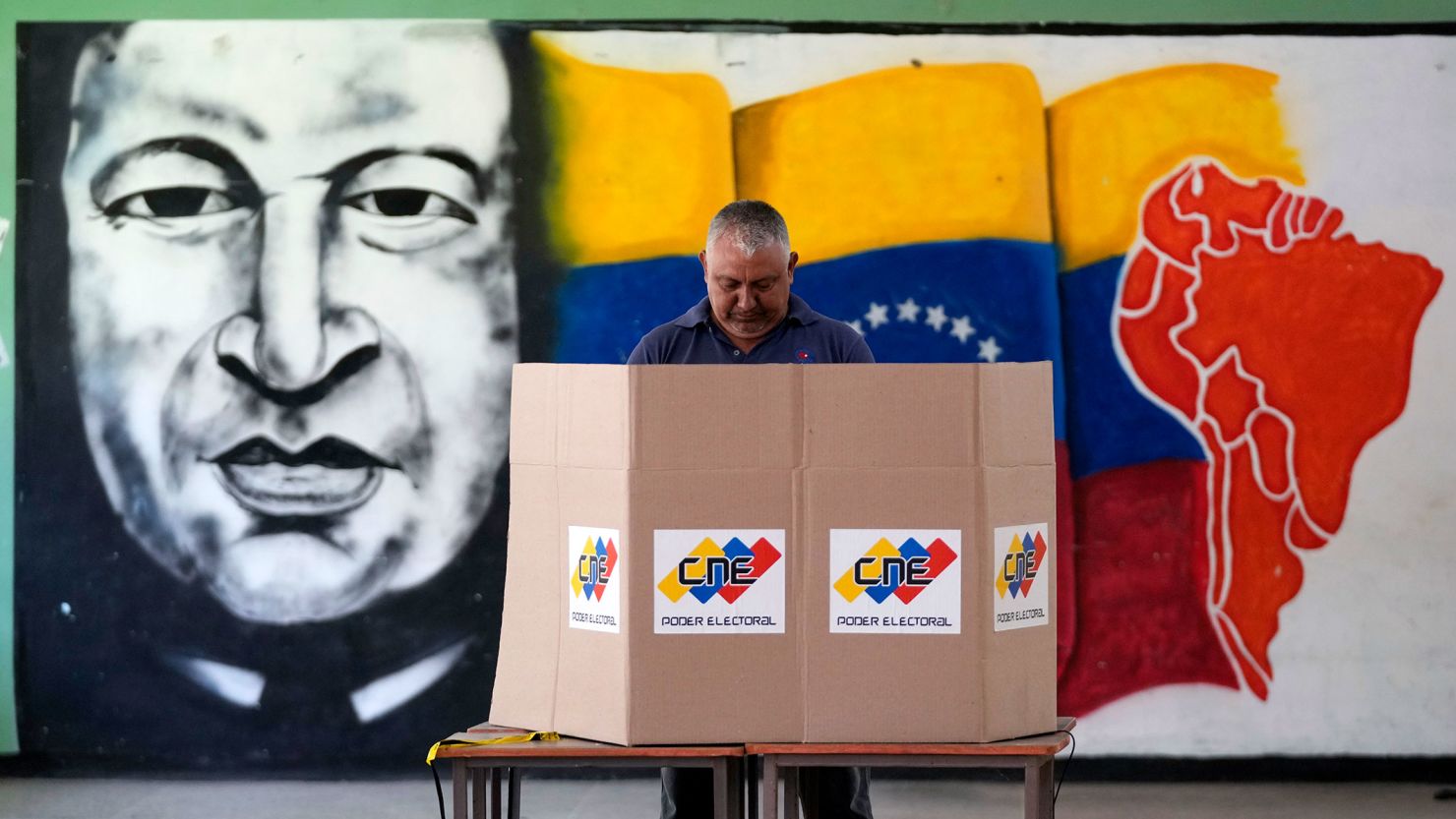
Venezuela’s National Elections Council (CNE) rushed on Monday, July 29, to proclaim Nicolas Maduro president for the next six years following presidential elections that had been hailed as among the most significant in the Americas in 2024. However, the election's legitimacy remains heavily disputed by opposition leaders, observation missions, and diplomatic envoys from the region.
In a swift and controversial move, the CNE declared Maduro the victor without publishing a single tally report on its website, a practice it had followed in almost every election since 2004. This unprecedented action has cast a shadow over the transparency and fairness of the entire election process. According to the initial bulletin issued early Monday morning, 80% of the tally reports had been processed at that time. If the CNE had already received this high percentage of the tally reports, why didn't they make them available on their website?
The CNE’s deviation from established transparency protocols marks a significant break from the practices it had followed since the onset of electoral automation nearly two decades ago. Since 2004, Venezuela had cultivated an electoral culture that included thorough audits before, during, and after the election.
Before these presidential elections, the CNE announced a series of 12 audits to ensure the election's legitimacy, but it failed to follow through. Essential processes to create a paper trail that would validate the results were omitted.
Unlike previous elections, where political actors received tally reports from every single voting machine and could compare these copies with the results published on the CNE website, this vital validation was not possible.
According to Omar Barboza, coordinator of the Unitary Platform, the opposition was denied copies of the voting records in nearly 70% of the voting centers on the night of the election. Additionally, 24 hours after announcing the results, the CNE had not published results by polling station, preventing political actors, observation missions, and the public from verifying the legitimacy of the declared results.
Once lauded by former U.S. President Jimmy Carter as “the best in the world,” Venezuela's voting system has seen a dramatic decline in credibility, particularly after the CNE severed ties with its long-time technology provider, Smartmatic. Under the current provider, Argentine-based ExCle, elections have become increasingly controversial, culminating in the latest election.
In 2020, the U.S. Office of Foreign Assets Control (OFAC) sanctioned ExCle for assisting Nicolás Maduro in conducting fraudulent elections. ExCle is known for its close connections with key figures in the CNE and the regime.
The rushed proclamation of Maduro, coupled with the CNE’s departure from established protocols, has led to widespread skepticism and calls for a thorough investigation. The international community and Venezuelan citizens alike await further details to understand the full extent of the election's irregularities.
Wednesday, February 7, 2024
El Salvador's Elections: The Good, the Bad, and the Ugly
As the dust settles on El Salvador's February 4 elections, the landslide reelection of President Nayib Bukele tells only part of the story. Amid Bukele's dominating 85% electoral sweep, a parallel narrative unfolded—one that could redefine the Salvadoran electoral landscape for generations. These elections didn't just test the popularity of a president; they put El Salvador's ambitious drive to modernize its voting system under the microscope.
The implementation of new voting technology in the election brought positive lessons, faced tribulations, and experienced turmoil. This analysis reviews the highs and lows encountered in streamlining the country's electoral process.
The Good:
One of the most laudable achievements of the 2022 general elections in El Salvador was the significant strides made in enfranchising the Salvadoran diaspora. Approximately 1.6 million Salvadorans, about 25% of all registered voters, reside abroad and were given the unprecedented opportunity to vote in this election.
The passage of the Special Law for the Exercise of Suffrage Abroad in 2022 was a major milestone. It mandated both internet-based remote voting and in-person electronic voting systems to assure that Salvadorans living outside the country could cast their ballots freely, equally, transparently, and confidentially.
The implementation of these systems appears to have been largely successful, enabling broader participation of expatriate Salvadorans in the democratic process.
The Bad:
Despite these advances, the participation of Salvadorans living abroad was not without its setbacks. In certain instances, polling centers overseas closed prematurely, leaving some voters disenfranchised. According to some official explanations, the provider hired to offer end-to-end services, from online voting to the setting and allocation of vote centers, did not consider the possibility of extending voting hours, a necessity in elections. Those vote centers located in private buildings were not allowed to stay open.
While initial reactions from the authorities suggested that additional voting opportunities might be scheduled to rectify this issue, the Supreme Electoral Tribunal (TSE) ultimately reversed its decision and announced that there would be no extra day of voting. Attorney General Rodolfo Delgado issued a statement, ensuring the public that anyone obstructing the electoral process would be held accountable.
The Ugly:
Perhaps the most disheartening aspect of the election was issues regarding the preliminary results system managed by the TSE itself. On election night, counts from only 31% of polling stations were reported. By Monday morning, figures had only reached 70.25% for the presidential election and a mere 5.06% for legislative positions. The TSE ordered manual vote tallying overnight and later instructed electoral bodies, with urgency, to return original records and election packages.
Poll workers' criticisms included reports of vote duplication or even triplication when processed records were entered into the TSE system. These irregularities were particularly noted during legislative vote scrutiny, raising concerns among voters about the integrity of the electoral process.
The delay in the announcement of election outcomes led an impatient President Bukele to prematurely announce his victory on social media, an action that breached election protocols. Had his advantage in the vote count been less substantial, it is likely that authorities and the public would have been less inclined to accept his early self-declaration of victory.
In conclusion, considering the difficulties encountered, it becomes imperative for the Supreme Electoral Tribunal (TSE) to carefully engage expert vendors with established expertise in managing preliminary election results. Outsourcing this critical aspect to such entities, which usually invest many more resources in developing election solutions, is a practice that typically yields better outcomes than risking the substantial investment and inherent challenges associated with in-house development of these complex technologies. This strategic approach by the TSE would be pivotal.
Thursday, August 12, 2021
Amid intimidation, Brazilian Congress foils Bolsonaro’s plan to tinker with e-voting system
In a scathing rebuke to President Jair Bolsonaro, Brazil’s lower house of Congress rejected a Bolsonaro-backed bill seeking to add paper ballots to the country’s all-digital election system.
The defiant vote took place amid saber-rattling by the Brazilian military, which paraded tanks in the streets of the capital city of Brasilia, reminiscent of the country’s military dictatorship from 1964-1985.
Senator Simone Tebet decried the show of force, saying that “tanks in the street, precisely on the day of the vote on the paper ballot amendment, is real, clear and unconstitutional intimidation.”
The proposed amendment died after failing to muster the 308 votes needed to pass, getting only 229 yes votes and 218 no votes.
Earlier, Bolsonaro launched a blistering attack on the voting system, calling it susceptible to fraud, without citing evidence. He warned that elections will not be held next year “if they are not clean and democratic.”
Brazil’s electronic voting system has been in use by the country in all elections, plebiscites, and referendums since 2006, including the 2016 polls which swept Bolsonaro into power.
The populist president is demanding for the adoption of a hybrid system using printed ballots that can be counted in case of disputes. Critics, however, fear that this regression to a manual system would undermine the credibility of the existing all-electronic system.
Critics are wary of Bolsonaro’s motives, suspecting that the sweeping and unsubstantiated claims are laying the grounds for claims of fraud in case the incumbent loses. The 66-year-old president’s popularity is at a record low and is in danger of losing to left leaning Luiz Inacio Lula da Silva, who is topping the surveys.
Observers are finding similarities between Bolsonaro’s move to that of former US President Donald Trump, who months before the elections in November 2020 had claimed in speeches, tweets, and interviews that he would be cheated, in case he lost.
The Brazilian Congress’ vote comes on the heels of a strongly-worded statement issued by a group of current and former judges warning of chaos if Brazil goes back to its manual counting of 150 million printed ballots.
Bolsonaro has been drawing flak for his anemic pandemic response which has resulted in Brazil registering the second-highest number of deaths in the world.
Thursday, June 10, 2021
Null votes, slow count and fraud allegations underscore need for electoral reforms in Peru
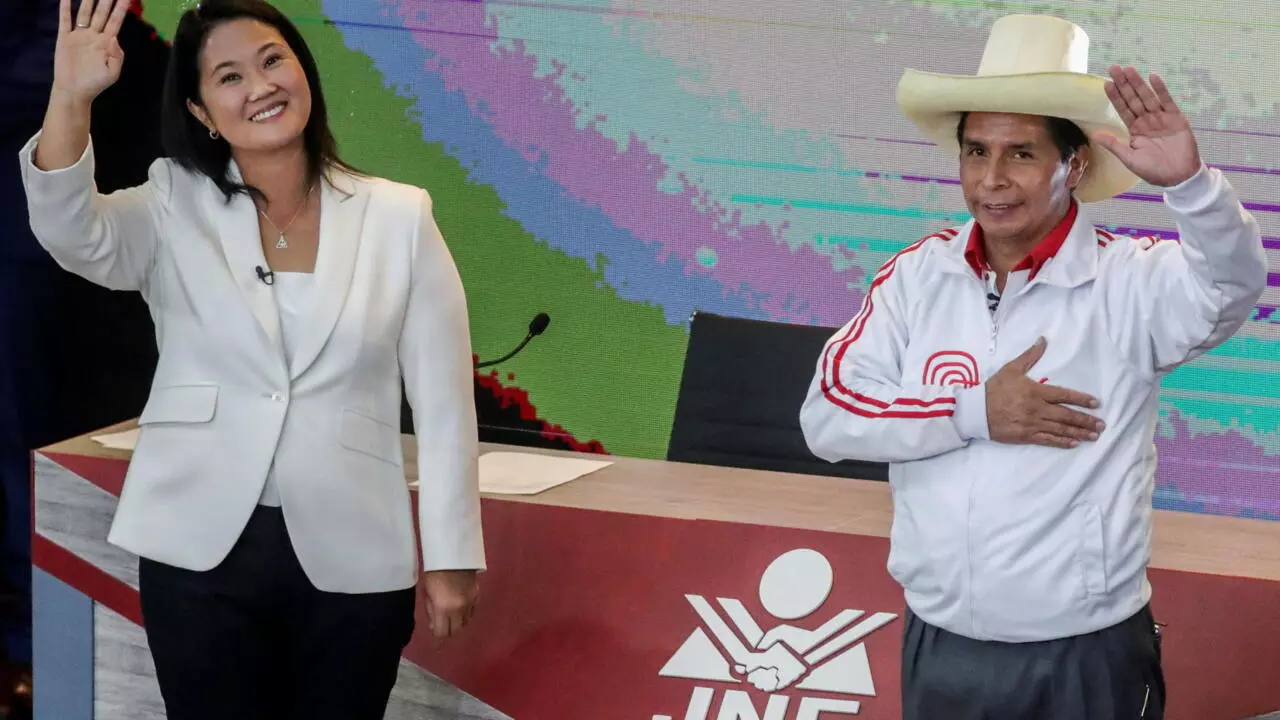
Left-wing candidate Pedro Castillo appears to be headed to victory in one of Peru’s most divisive elections ever. Yet his rival Keiko Fujimori is disputing the count, calling for the nullification of some 300,000 ballots for alleged anomalies, enough to potentially erase the slim 70,000 vote margin of Castillo.
While Fujimori’s allegations have yet to gain widespread support, with international election observers seemingly inclined to give the elections a clean bill of health, the same observers have cautioned against prematurely dismissing the claims.
After saying that they have "observed a positive electoral process" and that the “The Mission has not detected serious irregularities,” observers from the Organization of American States were quick to urge authorities to wait until challenges to the vote have been resolved before calling a winner.
At the very least, many believe that this should prompt Peruvian authorities to initiate reforms to stave off potential crises in similarly tightly contested elections.
The list of complaints, which seem to correspond with known weaknesses of the manual system, include lack of signatures on tallies, arithmetic mistakes, and doubts on whether a vote was properly marked in a ballot.
In a press conference, Fujimori and her lawyers claimed to have discovered proof of forged signatures on more than 500 ballot tallies, plus other anomalies, imputing such on the Free Peru party, to which Castillo belongs.
Experts have long warned against human intervention of any sort in elections, whether the hand counting of ballots or reliance on physical signatures to verify tallies. In recent years, manual elections have increasingly been regarded as being prone to errors, if not outright fraud. In fact, the idea of reducing human intervention has been a powerful impetus behind the shift by countries from manual to automated elections.
Moreover, the number of null votes in this Peruvian election cycle is cause for concern. While a lot of voters might have intentionally left their ballots blank in protest, the potential for disenfranchisement is alarming.
In the last three Peruvian elections (the first round of this year’s presidential and both rounds of the 2016 presidential elections), null votes surpassed 5% of total number of ballots cast. This translates to more than 1 million voters which were potentially disenfranchised because they “marked incorrectly their ballot”. In a contest separated by just 70,000 votes, this could easily spark a crisis.
Even more tellingly, the slow pace of the vote count has created the very conditions for this heightened political tension. While countries which use automation technology regularly expect to know their next leaders just a few hours after the polls close, a week has already passed without the Peru vote having been completely counted.
Peru finds itself at a crossroads -- stay with the flawed manual elections and risk a potentially disastrous outcome down the road, or start exploring ways to modernize its elections and take its fledgling democracy to a new level of stability.
Wednesday, April 14, 2021
Pandemic no barrier to Ecuadorian elections
In what is being hailed by observers as yet another incontrovertible proof that democracy will not be derailed, Ecuadorians braved the pandemic in droves last Sunday to cast their votes for the runoff elections.
Andrez Araus, the left-wing candidate, conceded to former banker Guillermo Lasso, who rode to victory with 53% of the votes in the runoff elections. Arauz had earlier led the first round of voting with more than 30% on Feb. 7, while Lasso slid into runoff by edging indigenous candidate Yaku Perez by half a percentage point.
“I congratulate him on his electoral triumph today and I will show him our democratic convictions,” said Arauz, a known protégé of outgoing president Rafael Correa.
To minimize risks, the CNE has implemented biosafety measures overseen by the 85,000 members of the armed forces and police. Voters have been ordered to wear a mask, bring their own bottle of hand sanitizer and pencil, keep a 5-foot (1.5-meter) distance from others and avoid all personal contact in the polling place. The only time voters were allowed to lower their masks will be during the identification process.
Vice President Maria Alejandra Munoz said after the first round that these elections are "crucial" since they are taking place in a different context, "because we have not experienced a pandemic like the current one and the consequences that not all Ecuadorians are included in the short-, medium-, and long-term solutions could be dire."
CNE President Diana Atamaint said that the election was the most important day of the exercise of democracy. “Today, Ecuador wins and democracy wins," said Atamaint.
She admitted that organizing the elections during the pandemic has been a "challenge," but that the necessary sanitary conditions have been created to "care for the health of Ecuadorians and for democracy."
A total of 13,099,150 Ecuadorians, including 410,239 living abroad, were registered to vote in the elections, which had some 38,808 polling stations nationwide.
Ecuadorian voters also decided the occupants of 137 seats in the National Assembly and five seats in the Andean Parliament.
Thursday, September 5, 2019
Election modernization moves forward in Argentina
Thursday, March 7, 2013
Latin America has a central role in the electoral year 2013
![]() |
| Photo: Eneas |
Wednesday, February 15, 2012
The Great Success of the Primaries in Venezuela
Tuesday, April 5, 2011
Chubut’s Electoral Results: A Handful of Doubts
Several days have passed since the Election Day, but the official consolidated data is not yet known. Although the ruling party candidate Buzzi was declared the winner, the delay in issuing the results and the slight difference between the candidates has created a shroud of doubt over the election. Various sources have suggested a lack of transparency in the process, and the debate about the need for implementing an electronic voting system has been revived.